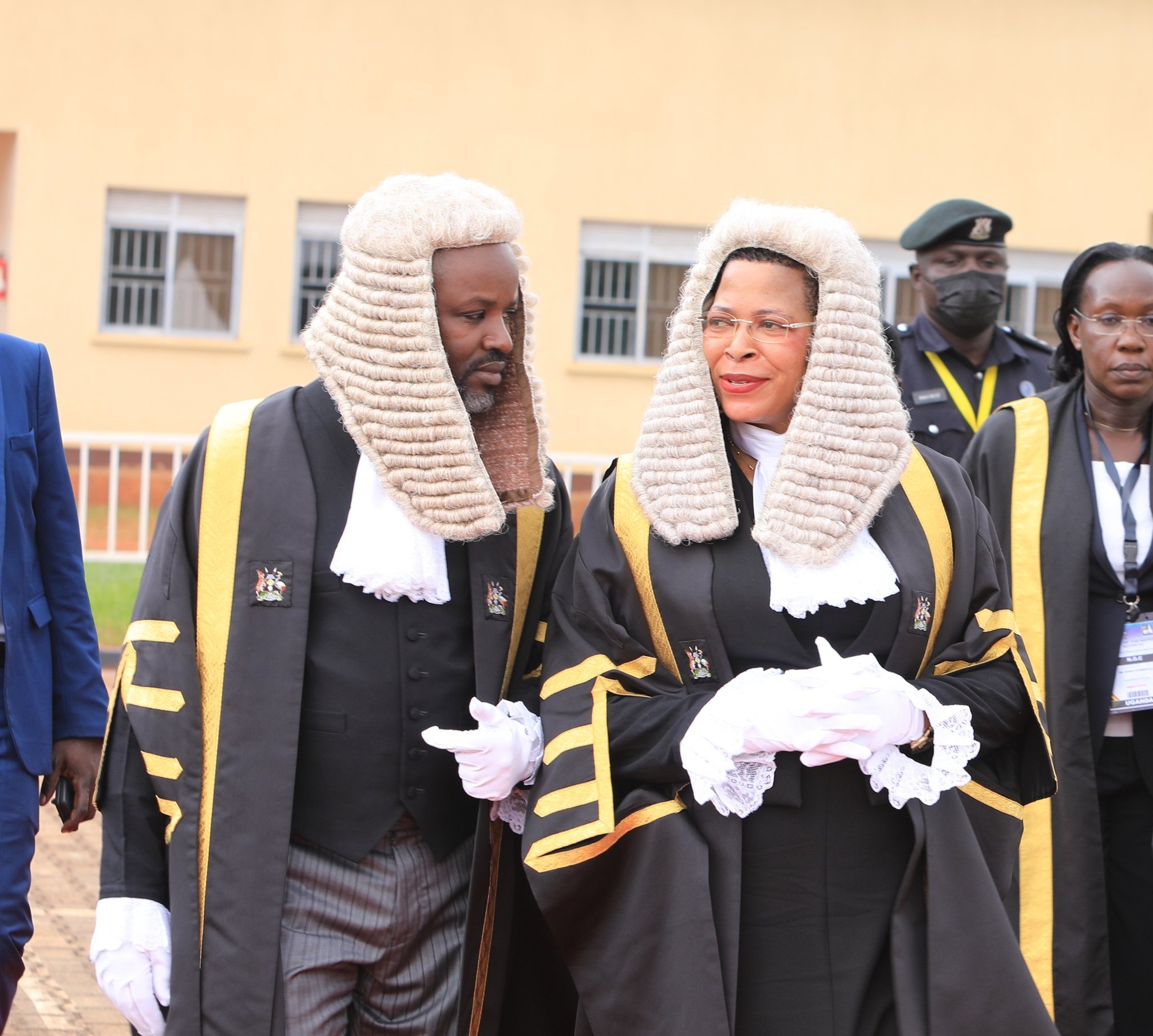
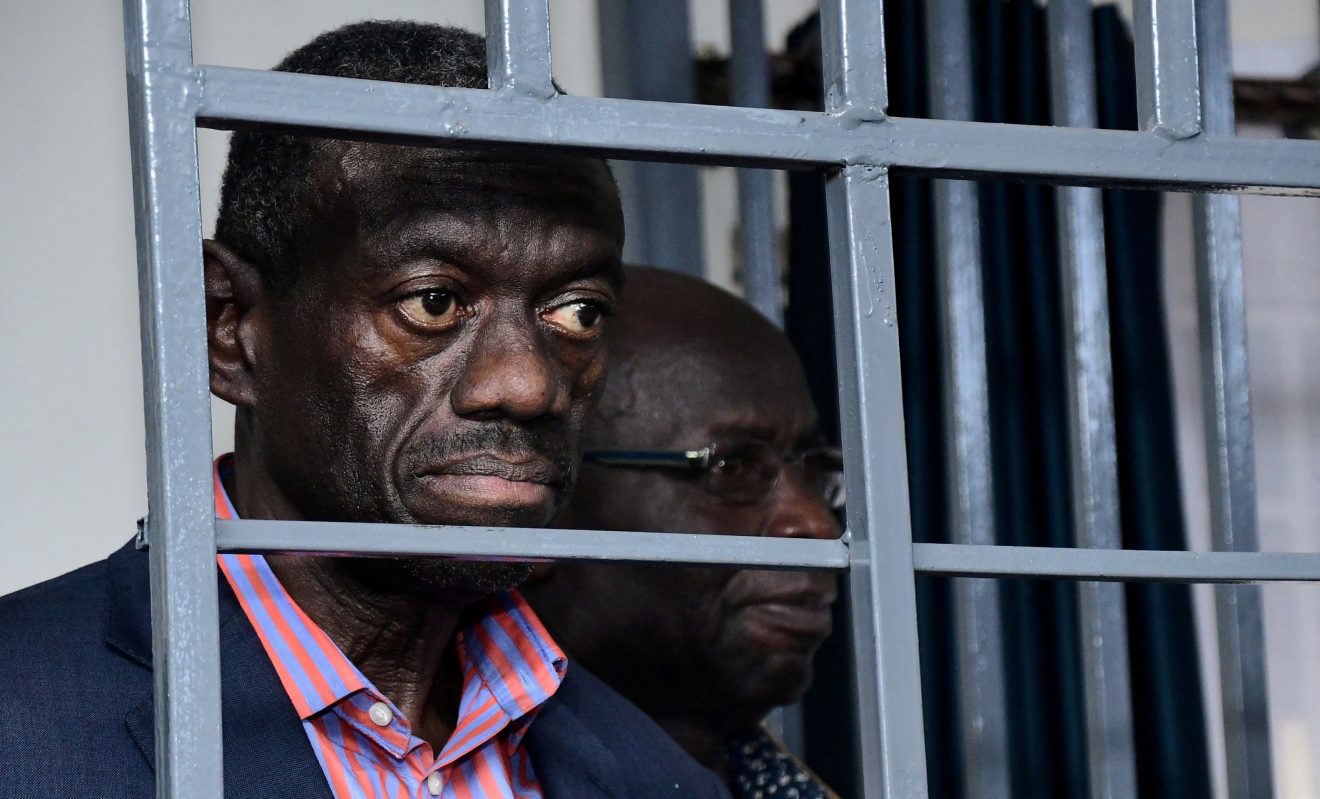
KAMPALA, Uganda — The High Court Criminal Division has dismissed an application by veteran opposition politician Kizza Besigye and his co-accused seeking to refer procedural questions in their treason case to the Constitutional Court, clearing the way for their trial to begin next week.

In a ruling delivered Monday through the Judiciary’s Electronic Court Case Management Information System, Justice Emmanuel Baguma found that the issues raised by the defense did not amount to substantial constitutional questions requiring interpretation by the Constitutional Court. He held that disagreements over court procedure alone were insufficient grounds for such a referral.
Besigye, a four-time presidential candidate and longtime critic of President Yoweri Museveni, is jointly charged with Hajji Obeid Lutale and Capt. Denis Oola. Prosecutors allege that the trio conspired to overthrow the government between 2023 and 2024 through meetings held in Geneva, Athens, Nairobi and Kampala.
According to the prosecution, the accused solicited funds, acquired weapons including surface to air missiles and ricin poison, organized paramilitary training and planned to use drone technology to carry out assassinations, including an alleged plot targeting Museveni.

Court documents further allege that Besigye met a Kurdish intelligence operative identified as Andrew Wilson, received $5,000 and facilitated the transportation of 36 Ugandan recruits to Kisumu, Kenya, for military training. The recruits were reportedly intercepted and deported before the training could take place.
The state intends to rely on audio and video recordings, social media communications, immigration records, telephone data and testimony from several witnesses, including military intelligence officials.
Besigye and Lutale were reportedly arrested in Nairobi in November 2024 and have remained in custody since then after several unsuccessful attempts to secure bail. The case has attracted significant political attention, with supporters describing the charges as politically motivated.
The dismissed application followed the prosecution’s completion of disclosure on June 1, including information relating to six witnesses whose identities had not previously been disclosed. Defense lawyers led by Erias Lukwago, Ernest Kalibala, Bayern Turinawe and Frederick Mpanga argued that the limited time between disclosure and the commencement of proceedings infringed on the accused persons’ right to a fair hearing under Article 28 of the Constitution.
The defense sought constitutional interpretation on whether seven days provided adequate time to prepare for a preliminary hearing after disclosure, whether restrictions on lawyer client consultations during weekends and public holidays violated fair trial rights, and whether trial dates could constitutionally be fixed before the conclusion of a preliminary hearing.
Justice Baguma rejected all three arguments. He ruled that one week was sufficient for preparation of the preliminary hearing, noting that substantial disclosure had already been made on Jan. 21, March 4 and March 11, and that the most recent disclosure largely concerned witness identities.
On access to counsel, the judge observed that prison authorities could facilitate meetings during weekends and public holidays and noted that the court had already directed the Deputy Registrar to ensure such arrangements were made. He also upheld the scheduling of trial dates before the preliminary hearing as a legitimate case management measure.
Citing established legal precedents, Baguma concluded that the defense had failed to demonstrate any prima facie constitutional questions warranting referral to the Constitutional Court.
The prosecution team, led by Assistant Director of Public Prosecutions Thomas Jatiko and Chief State Attorney Richard Birivumbuka, is expected to return to court on June 8 for the preliminary hearing and selection of assessors. The trial is scheduled to begin on June 11.
The treason charge carries a maximum sentence of death upon conviction.
The ruling marks a significant development in a case that has faced repeated delays arising from disputes over disclosure, applications for witness protection and requests for judicial recusal. Given Besigye’s prominence in Ugandan politics, the proceedings are expected to attract close scrutiny both within Uganda and abroad.
No part of this publication or its digital content may be reproduced, distributed, published, broadcast, rewritten, or redistributed in whole or in part without prior written permission from Kalisho Info.
For inquiries, contact: kalishoinfo@gmail.com
Stay informed and ahead of the curve! Follow Kalisho Info for real-time updates and breaking news.