
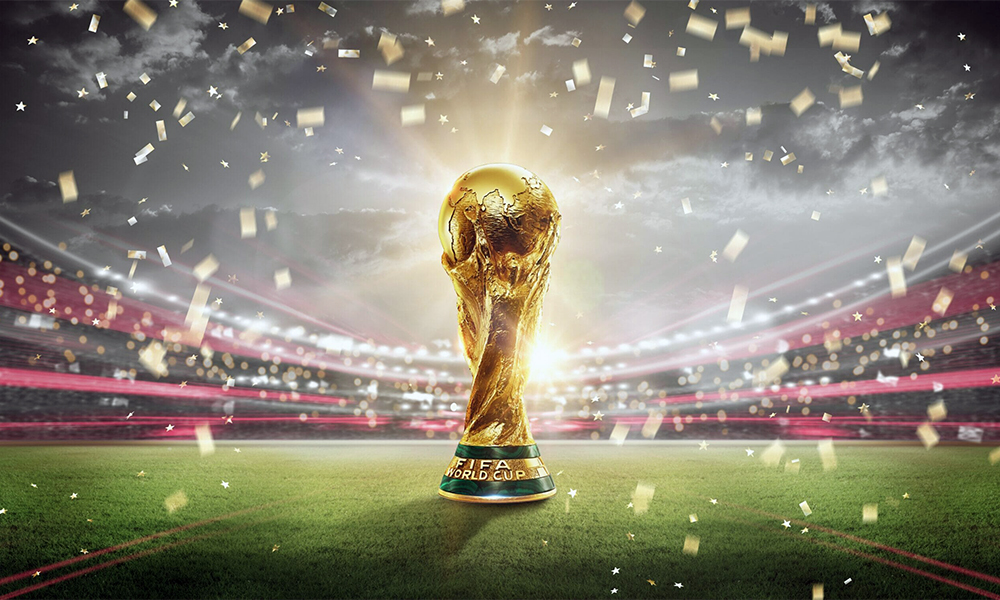
As the FIFA World Cup 2026 kicks off today across North America, billions of fans are once again preparing to immerse themselves in the world’s most watched sporting event. Stadiums are packed, national flags are flying high and dreams of football glory are alive from Buenos Aires to Berlin and from Lagos to Los Angeles.

Yet beneath the dazzling spectacle lies a question that has followed the tournament for decades: Is the World Cup really about football, or has it become one of the world’s most powerful geopolitical stages?
This year’s tournament is historic by every measure. The 2026 FIFA World Cup marks the first edition to be jointly hosted by three nations — the United States, Canada and Mexico. It is also the largest tournament in history, expanding from 32 to 48 teams and featuring a record 104 matches. Significantly, it coincides with the centenary celebrations of the World Cup, which was first held in Uruguay in 1930, making this tournament part of FIFA’s 100 year milestone commemorations.
For FIFA President Gianni Infantino, the tournament represents the organization’s ambition to make football more global and commercially successful than ever before. For critics, however, the event is also a reminder that football’s biggest prize has rarely been separated from politics, diplomacy, money and power.

FIFA has long insisted that football should remain politically neutral. History suggests otherwise.
The World Cup has repeatedly served as a platform for governments seeking legitimacy, prestige and influence. In 1934, fascist leader Benito Mussolini used Italy’s hosting rights to project the strength of his regime. In 1978, Argentina hosted the tournament while under military rule, drawing international criticism over human rights abuses. Throughout the Cold War, World Cup matches often carried political significance far beyond the football pitch.
The trend did not disappear with the modern era. Instead, it evolved.
Few episodes exposed football’s political undercurrents more dramatically than FIFA’s controversial decisions to award the 2018 and 2022 World Cups to Russia and Qatar respectively. Those choices triggered years of investigations, corruption allegations and arrests involving senior football officials. The resulting scandals shook FIFA’s reputation and raised serious questions about how hosting rights are awarded.
Qatar 2022 intensified the debate. While the Gulf state delivered one of the most visually spectacular tournaments in history, concerns over migrant worker welfare, labor rights and alleged sportswashing dominated headlines long before the opening match. Human rights organizations accused FIFA of prioritizing commercial success over accountability, while FIFA defended the tournament as a force for global unity.
Now attention has shifted to North America.
The United States, Canada and Mexico offer world class infrastructure, enormous commercial markets and some of the largest sporting venues on Earth. Yet the 2026 tournament has arrived amid growing geopolitical tensions, immigration debates, security concerns and questions about accessibility for supporters from around the world.
For many observers, the World Cup increasingly resembles a diplomatic summit wrapped in a football tournament. Governments view it as an opportunity to showcase national prestige. Corporations see unparalleled marketing opportunities. Political leaders seek visibility before global audiences measured in billions.
Meanwhile FIFA’s influence continues to grow. The organization now generates billions of dollars in revenue from broadcasting rights, sponsorships and ticket sales. Few sporting bodies possess comparable global reach or soft power.
Yet despite recurring controversies, one reality remains unchanged.
Fans keep watching.
They watch because football still possesses a unique ability to transcend borders, languages and cultures. They watch because moments of brilliance on the pitch can temporarily overshadow the politics surrounding them. They watch because the World Cup continues to deliver unforgettable stories that unite people, even when the institution behind it remains deeply contested.
That contradiction may ultimately define the World Cup itself.
It is simultaneously a celebration of sport and a showcase of global power. It is a festival of national pride and a multibillion dollar business enterprise. It is a platform for unity and, at times, a mirror reflecting the political tensions of the world hosting it.
As the tournament unfolds across three countries and a record number of cities, the football will undoubtedly provide drama, heartbreak and glory. But beyond the goals and trophies, another contest will be playing out: the ongoing struggle between sport’s idealism and the political realities that have shaped the World Cup for nearly a century.
The beautiful game remains beautiful. The politics surrounding it, however, have always been part of the story.
No part of this publication or its digital content may be reproduced, distributed, published, broadcast, rewritten, or redistributed in whole or in part without prior written permission from Kalisho Info.
For inquiries, contact: kalishoinfo@gmail.com
Stay informed and ahead of the curve! Follow Kalisho Info for real-time updates and breaking news.