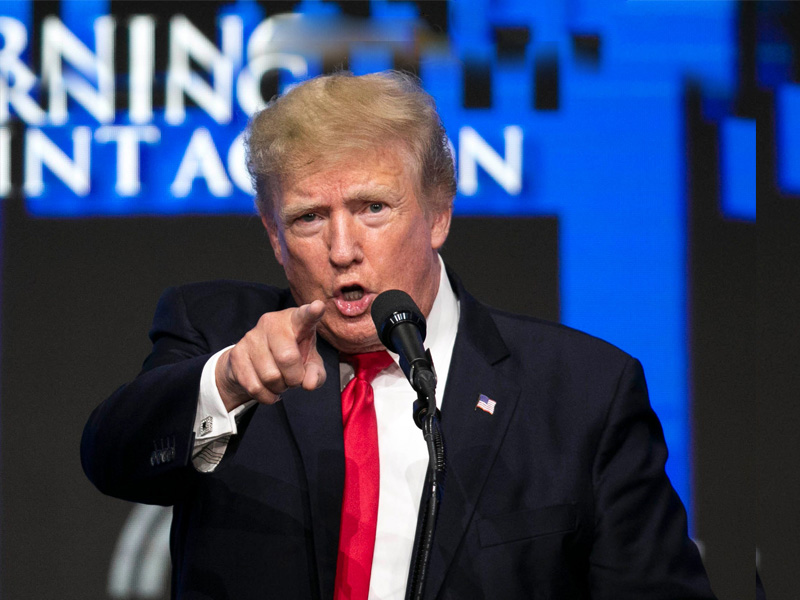


WASHINGTON, USA – U.S. Defense Secretary Pete Hegseth is facing a major political challenge after Republican lawmaker Thomas Massie introduced eight articles of impeachment accusing him of violating the Constitution and federal laws while overseeing American military operations abroad.

The move has opened a fresh confrontation in Washington, with lawmakers questioning the limits of presidential military authority and whether senior government officials can be held personally accountable for decisions made during armed conflicts.
Massie, a Republican from Kentucky, introduced the impeachment resolution Monday, Nov. 9, targeting Hegseth’s handling of the war in Iran, military operations in Yemen and Venezuela, and other actions critics say exceeded his legal authority.
Three of the charges concern military operations against Iran without congressional authorization. Another relates to civilian casualties, including a deadly strike on a girls’ school in Minab in February. The remaining allegations involve strikes on suspected drug trafficking vessels, operations in Venezuela and Yemen, and alleged retaliation against Democratic Sen. Mark Kelly.

Hegseth has rejected the allegations, describing the impeachment effort as a political stunt rather than a legitimate response to misconduct. He maintains that disagreements over military policy do not amount to impeachable offenses.
President Donald Trump has publicly defended Hegseth, while House Speaker Mike Johnson has expressed confidence that Republicans can defeat the resolution. Democratic leaders, including Hakeem Jeffries, have supported the impeachment effort.
The controversy comes shortly after the November midterm elections, in which Democrats secured congressional majorities that will take effect in January. The results have intensified political pressure on the Trump administration, particularly over the Iran conflict and its economic consequences.
Under the U.S. Constitution, impeachment is the process through which Congress can formally accuse a president, vice president or other federal civil officer of serious misconduct. Cabinet secretaries, including the defense secretary, are subject to the same constitutional process.
The Constitution identifies treason, bribery and other high crimes and misdemeanors as grounds for impeachment. The final category is not precisely defined, allowing Congress to consider serious abuses of power and breaches of public trust, even where no criminal conviction exists.
The process begins in the House of Representatives, where lawmakers consider specific allegations known as articles of impeachment. A simple majority is required to approve an article, meaning at least 218 votes if all 435 House seats are filled and every member votes.
However, impeachment does not automatically remove an official from office. It amounts to a formal accusation, with the Senate responsible for deciding whether the official should be convicted and removed.
A Senate conviction requires a two thirds majority of senators present. If all 100 senators participate, at least 67 must vote in favor of conviction, a threshold that makes removal particularly difficult in a politically divided Congress.
Unlike a presidential impeachment trial, which is presided over by the chief justice of the United States, a Cabinet secretary’s trial can be presided over by the vice president in the vice president’s constitutional role as president of the Senate.
Hegseth’s case is unusual because the impeachment effort was introduced by a Republican against a senior official serving under a Republican president. Massie filed the resolution under a procedure requiring the House to act within two legislative days.
The House was preparing for an initial procedural vote Tuesday, Nov. 10, to determine whether the impeachment resolution would advance. That vote would not itself amount to impeachment, although it could determine whether lawmakers proceed to a final vote.
American history offers few examples of Cabinet secretaries facing impeachment. Secretary of War William Belknap was impeached in 1876 following corruption allegations, while Homeland Security Secretary Alejandro Mayorkas was impeached in 2024 over his handling of immigration enforcement.
Neither was removed through the impeachment process. Belknap was acquitted by the Senate after resigning, while the Senate dismissed the charges against Mayorkas without conducting a full trial.
Three U.S. presidents have also been impeached: Andrew Johnson, Bill Clinton and Donald Trump, who faced impeachment twice during his first term. None was removed through a Senate conviction.
For Hegseth, the immediate question is whether enough lawmakers will support the allegations to move the case beyond the House. Even if impeachment succeeds, securing the Senate votes needed for removal would present another substantial challenge.
Beyond Hegseth’s political future, the proceedings raise a wider constitutional question: how far can the executive branch go in conducting military operations without congressional approval, and what consequences should follow when senior officials are accused of crossing those limits?
US House Blocks Hegseth Impeachment Bid as Trump Defends Defense Secretary
The U.S. House of Representatives has blocked an immediate attempt to impeach Defense Secretary Pete Hegseth, voting 211 to 204 on Tuesday to refer the allegations against him to the House Judiciary Committee.
The impeachment resolution was introduced by Republican Rep. Thomas Massie of Kentucky, who accused Hegseth of violating constitutional limits on military authority and overseeing controversial operations in Iran, Venezuela and Yemen.
Massie presented eight articles of impeachment, including allegations of unauthorized military action, civilian casualties and deadly strikes against vessels suspected of transporting drugs.
Hegseth rejected the accusations, describing the impeachment effort as politically motivated. President Donald Trump also defended his defense secretary, praising his leadership and dismissing calls for his removal.
The vote exposed divisions within the Republican Party, with Massie standing against most of his colleagues. He warned that Hegseth could face renewed impeachment proceedings when Democrats assume control of Congress in January following their midterm election victories.
Under the U.S. Constitution, impeaching a senior federal official requires a simple majority in the House, while conviction and removal from office require support from two thirds of senators present during a Senate trial.
Tuesday’s decision does not clear Hegseth of the allegations. Instead, it prevents an immediate impeachment vote while leaving open the possibility of further congressional action.
For now, Hegseth remains in office with Trump’s support. However, continuing disputes over military operations, civilian casualties and congressional oversight could bring renewed scrutiny of his leadership.
No part of this publication or its digital content may be reproduced, distributed, published, broadcast, rewritten, or redistributed in whole or in part without prior written permission from Kalisho Info.
For inquiries, contact: kalishoinfo@gmail.com
Stay informed and ahead of the curve! Follow Kalisho Info for real-time updates and breaking news.