
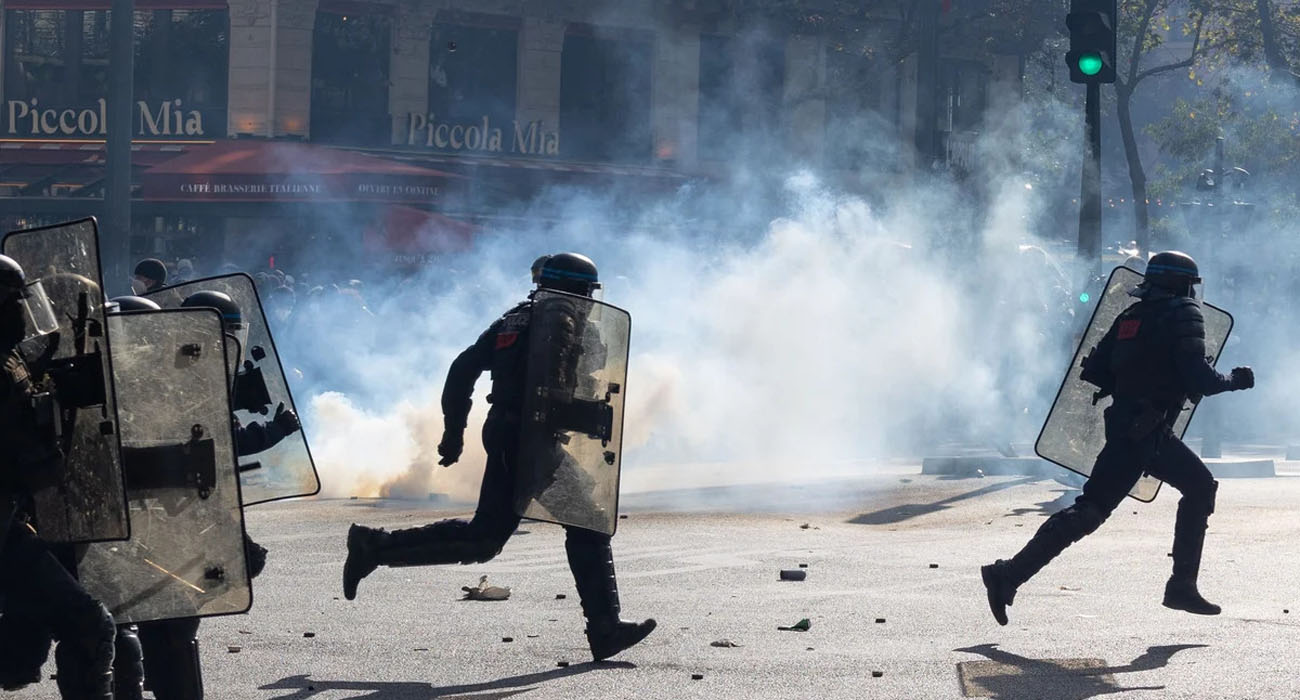
PARIS, France – France is facing a new political crisis after nationwide demonstrations over living costs and deteriorating public services descended into violence, leaving President Emmanuel Macron’s government under pressure over how it handled the unrest.

The immediate focus on Monday shifted from the protesters to the government’s preparedness. Macron rejected Interior Minister Laurent Nuñez’s offer to resign and instead ordered him to restore order and examine what went wrong in the state’s assessment of the threat.
The protests drew hundreds of thousands of people into the streets on Saturday. They had grown out of weeks of student demonstrations but attracted a wider group of citizens angry about the cost of living, public services and economic conditions.
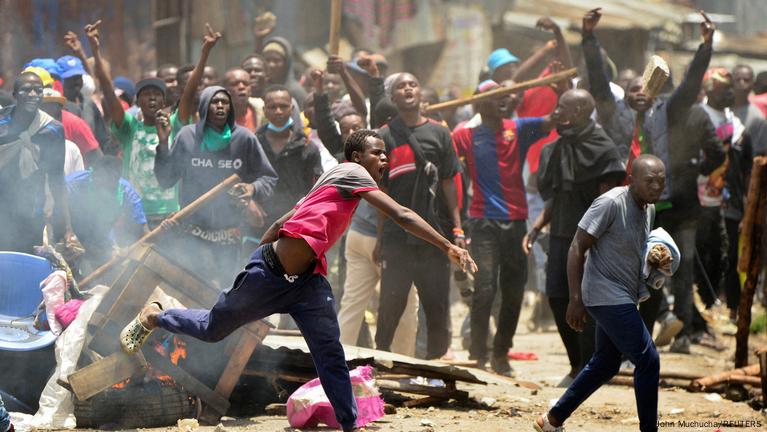
What began largely as demonstrations later fractured in several cities, with groups attacking businesses and public buildings, setting fires and clashing with police.

In Limoges, the historic city hall was set on fire. Marseille also saw attacks on municipal facilities, while Paris experienced looting and clashes in several areas.
French authorities say the scale of the violence caught the security services off guard. Nuñez said about 60,000 police and other security personnel had been deployed, but acknowledged that the forces were unable to contain the violence in some cities.
The government has also come under criticism for failing to anticipate how quickly the demonstrations could grow. French officials have pointed to radical left wing groups and opportunistic criminals among those involved in the violence, while opposition politicians have questioned the government’s wider handling of the protests.
The human and institutional cost is already significant. Prime Minister Sébastien Lecornu said about 1,200 people had been arrested and 150 law enforcement officers injured following Saturday’s unrest.
The response has also opened another dispute over policing. Several cases involving injured protesters have prompted investigations into police conduct, adding a second layer to the government’s problems as authorities try to explain both why the violence was not prevented and whether some police responses went too far.
For Macron, the timing makes the situation especially difficult. France is dealing with economic pressures and a government that must also navigate a contentious budget process, while the country is about six months away from its next presidential election.
The unrest therefore goes beyond a weekend of street violence. It has exposed a widening gap between public frustration over economic and social conditions and the government’s ability to respond before demonstrations turn destructive.
Macron has vowed that those responsible for violence and destruction will be held accountable. His decision to keep Nuñez in office, however, puts the responsibility for the next phase firmly on the government: restoring order while addressing questions over intelligence failures, policing and the grievances that brought so many people onto the streets in the first place.
No part of this publication or its digital content may be reproduced, distributed, published, broadcast, rewritten, or redistributed in whole or in part without prior written permission from Kalisho Info.
For inquiries, contact: kalishoinfo@gmail.com
Stay informed and ahead of the curve! Follow Kalisho Info for real-time updates and breaking news.