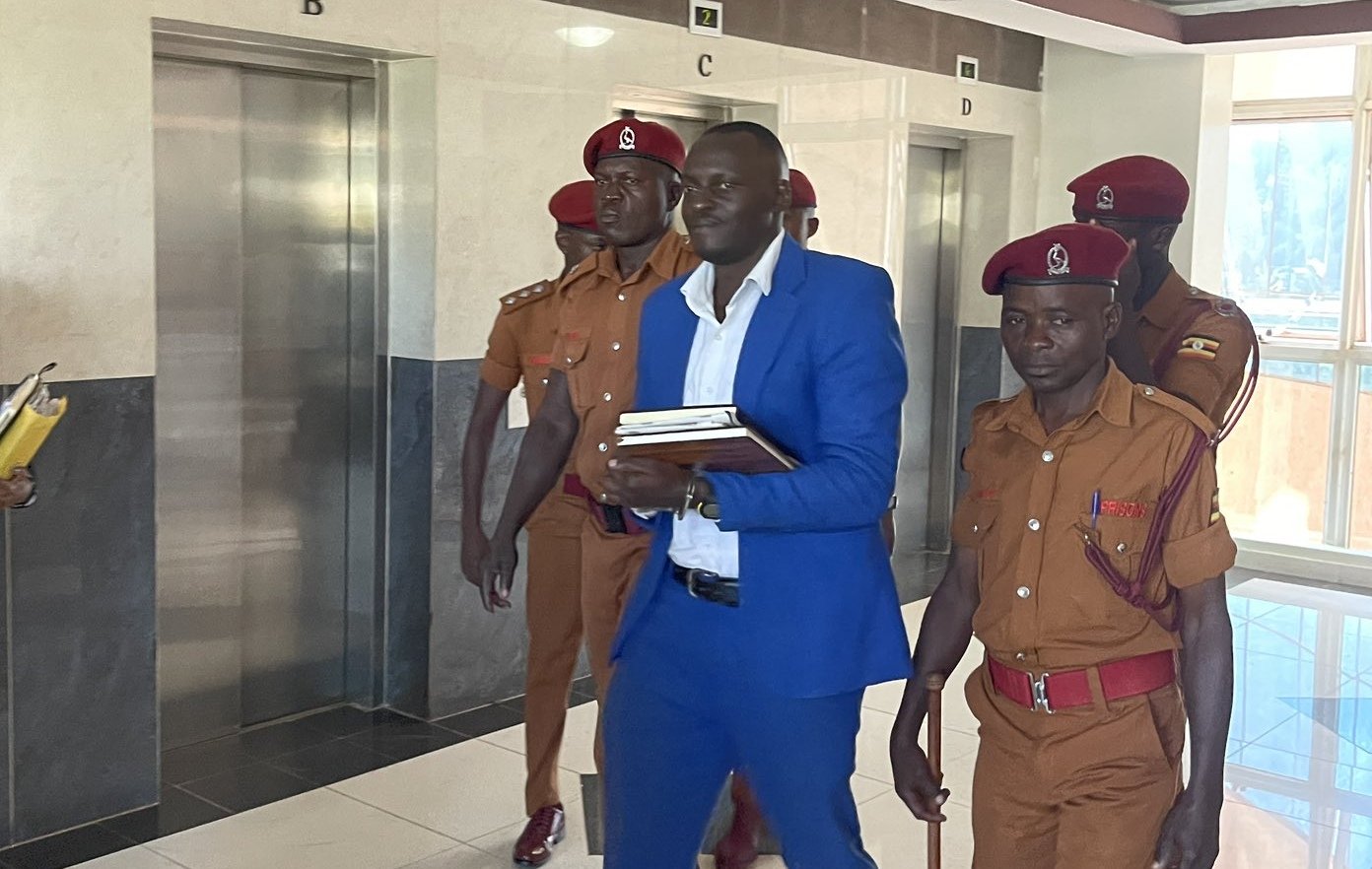

UNITED NATIONS — Uganda’s Olara Otunnu has moved into third place in the latest informal race for United Nations secretary general, according to leaked results from a confidential Security Council straw poll held Friday.
Otunnu received five “encourage” votes, seven “discourage” votes and three “no opinion” votes among the council’s 15 members, according to diplomats and reports that obtained the results. His five positive votes were unchanged from the previous poll, but fewer council members opposed him than those who opposed Argentina’s Rafael Grossi and former Senegalese President Macky Sall, who also received five “encourage” votes.
The result puts the Ugandan candidate behind Costa Rica’s Rebeca Grynspan, who received nine “encourage” votes, and Guyana’s Carolyn Rodrigues Birkett, who received eight.
The Security Council does not officially publish the results of its straw polls. France’s UN ambassador, Jérôme Bonnafont, who is council president for September, confirmed that the poll had been held but did not disclose the figures. The results were instead reported by diplomats and other sources familiar with the process.

For Otunnu, the latest figures mark a notable change from the first poll in July.
He received two “encourage” votes, five “discourage” votes and eight “no opinion” votes on July 30. In the second poll on Aug. 21, his support rose to five “encourage” votes, while the number of members expressing no opinion fell to five. The latest poll shows five “encourage,” seven “discourage” and three “no opinion.”
That means the number of council members who have not expressed either support or opposition to Otunnu has fallen sharply in less than two months.

Still, five “encourage” votes are well short of the nine votes normally required for the Security Council to recommend a candidate to the General Assembly. The candidate must also avoid a veto from any of the council’s five permanent members: China, France, Russia, the United Kingdom and the United States.
Why Otunnu’s candidacy is unusual
Otunnu is not simply another name on the ballot.
The Ugandan diplomat has a direct connection to the very process now being used to assess his candidacy.
In December 1981, when Otunnu was Uganda’s representative to the Security Council and served as its president, the council was deadlocked over the selection of a successor to Secretary General Kurt Waldheim. After repeated inconclusive votes, Otunnu helped devise an informal system that allowed council members to identify candidates acceptable to the permanent members.
The method became known as the Otunnu Formula and has since evolved into the straw poll system used during successive secretary general selections. The 1981 process ultimately helped clear the way for Peru’s Javier Pérez de Cuéllar, who was elected secretary general that December.
More than four decades later, Otunnu is now being tested by the same mechanism.
His campaign has placed UN reform, conflict prevention, protection of children and women affected by war, and governance of artificial intelligence among its priorities.
Who is Olara Otunnu?
Born in Mucwini, northern Uganda, in September 1950, Otunnu is a lawyer, diplomat and former Ugandan foreign minister. He studied at Makerere University, Oxford University and Harvard Law School.
He served as Uganda’s permanent representative to the UN from 1980 to 1985 and was Uganda’s foreign minister from 1985 to 1986. He later served as president of the International Peace Academy, now known as the International Peace Institute, from 1990 to 1998.
At the United Nations, Otunnu served from 1997 to 2005 as Under Secretary General and the first UN special representative for children and armed conflict.
The UN credits his work with helping place the protection of children affected by war on the Security Council agenda and with developing an international monitoring and reporting system for grave violations against children. That system was formally established through Security Council Resolution 1612 in 2005.
Uganda formally nominated Otunnu for secretary general on July 24, 2026, making him one of the later entrants into the contest. The UN’s official selection page lists his nomination and campaign documents.
How the UN chooses its secretary general
The secretary general is not elected directly by the 193 UN member states.
Under Article 97 of the UN Charter, the General Assembly appoints the secretary general on the recommendation of the Security Council. In practice, the Security Council must first reach agreement on a candidate before the General Assembly can make the appointment.
The straw polls are an informal part of that process. Council members privately indicate whether they “encourage” or “discourage” each candidate, or have “no opinion.”
The early ballots do not identify whether a particular vote came from one of the five permanent members. That matters because a candidate can collect nine or more positive votes but still fail if a permanent member ultimately uses its veto. Later stages of the process can use colour coded ballots to make the position of the permanent members clearer.
The current poll is therefore not a final vote. It is a test of where support and opposition stand.
Where the race stands
Eight candidates remain in the contest following the latest poll.
Grynspan, secretary general of the UN Conference on Trade and Development and a former Costa Rican vice president, received nine “encourage” votes, five “discourage” and one “no opinion.”
Rodrigues Birkett, Guyana’s ambassador to the UN and former foreign minister, received eight “encourage,” six “discourage” and one “no opinion.”
Otunnu received five “encourage,” seven “discourage” and three “no opinion.” Grossi also received five “encourage” votes but had eight “discourage” votes. Sall received five “encourage” and nine “discourage” votes.
Former Chilean President Michelle Bachelet, former Ecuadorian foreign minister María Fernanda Espinosa Garcés and Ecuadorian diplomat Ivonne A Baki are also in the race.
The contest is also being watched for its gender dimension. No woman has ever served as UN secretary general, despite women having held several of the organisation’s other senior positions.
What happens next?
The third straw poll was held just before the UN General Assembly’s high level week, which begins in New York next week. The current Secretary General, António Guterres, is due to complete his second term on Dec. 31, 2026.
A fourth straw poll could follow after the high level meetings. There is no fixed number of straw polls required before the Security Council makes its recommendation.
That leaves the race open.
For Uganda, however, Friday’s figures provide a new point of interest. Otunnu entered the contest late, started with two positive votes, reached five in August and retained those five in September while the number of undecided council members fell from eight to three.
And there is an irony that will not be lost on observers of the UN process: the Ugandan diplomat who helped develop the straw poll system in 1981 is now seeking the world’s top diplomatic job through the very mechanism he helped create.
That makes Otunnu’s campaign one of the more unusual stories in the 2026 secretary general race.