
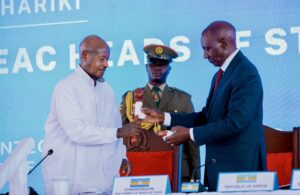
ARUSHA, Tanzania — Uganda’s President Yoweri Kaguta Museveni has assumed the chairmanship of the East African Community (EAC) Summit of Heads of State, taking over from Kenya’s President William Ruto during the bloc’s 25th Ordinary Summit held in Arusha.
The leadership handover took place March 7 at the Arusha International Conference Centre in northern Tanzania. The EAC chairmanship rotates among member states each year as part of efforts to strengthen regional cooperation and integration.

Museveni will serve as chairperson from March 2026 to March 2027. In his first remarks after assuming the role, he thanked regional leaders for the trust placed in him and sent greetings from the people of Uganda. He said East Africa stands at a critical moment in its political and economic development.
The Ugandan leader urged member states to work together to avoid what he called “okukonesa,” a Luganda word referring to mismanagement of the African liberation and integration agenda. Museveni warned that divisions among African countries and fragmented markets could undermine economic progress.
He also used a traditional proverb about bundled arrows to emphasize unity among the region’s nations. According to Museveni, stronger cooperation among EAC countries will improve security, trade and prosperity across the bloc.
The summit brought together leaders from the community’s eight member states: Tanzania, Kenya, Uganda, Rwanda, Burundi, South Sudan, the Democratic Republic of the Congo and Somalia. Somalia joined the regional bloc in 2024, expanding the community’s geographic reach in the Horn of Africa.
During the meeting, leaders also confirmed the appointment of Ambassador Stephen Patrick Mbundi of Tanzania as the new secretary general of the EAC. He replaces Veronica Mueni Nduva, who had been serving in the role. The summit further approved new judges for the East African Court of Justice as part of efforts to strengthen the community’s institutions.
Museveni’s tenure begins as the regional bloc faces a number of challenges. The organization is dealing with about $89 million in unpaid contributions from member states, which has strained its operations. Security concerns also remain, particularly the ongoing conflict in eastern Democratic Republic of the Congo, where regional leaders have sought diplomatic and security solutions.
Economic integration remains a major priority for the bloc. Leaders are pushing for improved infrastructure, expanded cross border trade and deeper political cooperation to build a stronger common market.
The East African Community was originally formed in 1999 and formally relaunched in 2000 after the collapse of an earlier regional body in 1977. Today the bloc represents more than 300 million people and a combined economy estimated at over $300 billion.
Observers say Museveni’s long involvement in regional diplomacy could shape the community’s direction during his tenure. Supporters point to his experience in continental and global forums as an advantage. Critics, however, say the coming year will test the bloc’s ability to manage its finances, maintain unity and address security threats.
For the East African Community, the new leadership comes at a moment when deeper integration remains both a major opportunity and a significant challenge.