
KAMPALA, Uganda — President Yoweri Museveni used the 40th anniversary of NRA Victory Day to say Uganda has completed several phases of recovery and is now firmly in a knowledge driven economy.
Speaking Monday at Kololo Independence Grounds, Museveni said the journey since 1986 had followed five clear stages. He said the first task was restoring stability after years of conflict, followed by rebuilding the economy, diversifying production and adding value to local resources.

Museveni said Uganda’s current growth is anchored in agriculture, manufacturing and services, with oil and gas emerging as a new pillar. He told the crowd that manufacturing now supplies about 65 percent of goods sold in local supermarkets, a shift he described as proof of reduced dependence on imports.
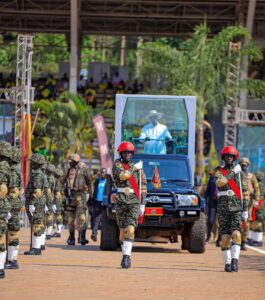
He pointed to visible changes in daily life, including locally made Kiira vehicles on the roads and the start of oil production near Lake Albert later this year. He said agriculture and services continue to create wealth and jobs, while new skills and technology are shaping the next phase of growth.
The president also addressed politics and participation. He said he received about eight million votes in the recent election but noted that many supporters did not turn up to vote. He blamed intimidation, violence and internal indiscipline, saying these problems must be resolved to strengthen democracy.
“These issues must be addressed so participation improves, stability is maintained and every Ugandan is fully involved in our country’s transformation,” Museveni said.
President Museveni urged young Ugandans to protect the gains of peace and to focus on skills, production and discipline, saying the future of the country depends on how the next generation builds on the liberation legacy.
The celebrations included a joint parade by the Uganda Peoples Defence Forces, police, prisons and wildlife officers, along with cultural performances and the awarding of national medals to selected Ugandans.
At the celebrations, 33 Ugandans drawn from different sectors were awarded national medals. The recipients included liberation war veterans, civil servants and community leaders recognized for long service and commitment to national development.