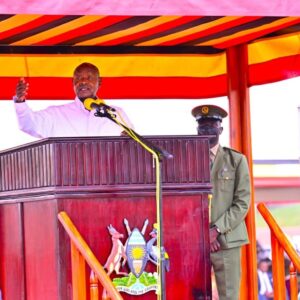

KAMPALA, Uganda — On January 29, 1986, Yoweri Kaguta Museveni was sworn in as President of Uganda on the steps of Parliament, three days after his National Resistance Army took control of Kampala. He was 40 years old and the ninth leader since independence in 1962. Before a jubilant crowd and a nation emerging from years of war and fear, Museveni declared that Uganda was not witnessing a mere change of guards but a fundamental change in the politics of the country.
The speech, delivered without notes, set the tone for a new era. Museveni said Africa had seen many changes that only produced turmoil, with one group replacing another and turning out worse. Uganda, he promised, would be different. The National Resistance Movement, he said, had clear objectives and sought to raise the quality of politics. While admitting that no movement could be free of bad elements, he said it was deliberate policy to fight abuse and restore discipline in public life.

Democracy stood at the center of his message. Museveni told Ugandans that democratic government was not a favor from rulers but a birthright of the people. Sovereign power, he said, must belong to the population and not the government. He outlined a system that would begin at the grassroots, with elected village resistance committees, moving through parish and district levels, and eventually to a national parliament directly elected by the people. Leaders who wished to change political sides, he warned, would have to return to voters for a fresh mandate.
He also spoke firmly on security and the rule of law. Every Ugandan, Museveni said, had the right to live and work anywhere without fear. Any individual or group that threatened the security of the people would be dealt with firmly. He rejected the idea that any regime had the right to kill or abuse citizens, saying people should die only from natural causes beyond human control and not at the hands of fellow Ugandans. He said his army had executed five of its own members for killing civilians during the war, presenting this as proof of discipline and accountability.
The events of the day drew wide international attention. Reporting from Kampala, The New York Times described a city still bearing the scars of battle. Bodies lay along the road from Entebbe Airport, spent shells marked hurried graves, and blood stained uniforms were scattered on hills where fierce fighting had taken place. At the same time, the paper noted signs of life returning as markets filled with fresh produce and residents resumed daily routines in a country once described as the pearl of Africa.
Museveni used the occasion to reflect on failed peace efforts with the previous military leadership. He said participating in talks with figures he described as criminals had been painful and blamed international pressure that, in his view, cared more about trade routes than justice for Ugandans. He said his movement would not take part in any government that included those responsible for mass killings.
Unity was another strong theme of the address. Museveni rejected politics based on tribe or religion, arguing that roads, hospitals and schools mattered to all citizens regardless of background. He called sectarian politics empty and opportunistic, saying it distracted people from shared problems. He presented his army as national in character and said claims of deep regional divisions were false and would fail.
Looking beyond Uganda, Museveni called for regional cooperation in East Africa, especially in transport and communication, to overcome small markets and spur development. He criticized African leaders who traveled in luxury while their people lived in poverty, arguing that leadership should be judged by the well being of ordinary citizens rather than titles or international status.
In closing, Museveni appealed to those still resisting to surrender and join the new order, promising integration and rehabilitation. He said his movement had survived against overwhelming odds because of clear politics, organization and strategy. Nearly four decades later, the words spoken on that January day remain among the most cited in Uganda’s history, capturing a moment when a war weary nation listened to promises of democracy, security and unity, and believed it was witnessing the start of a fundamental change.