

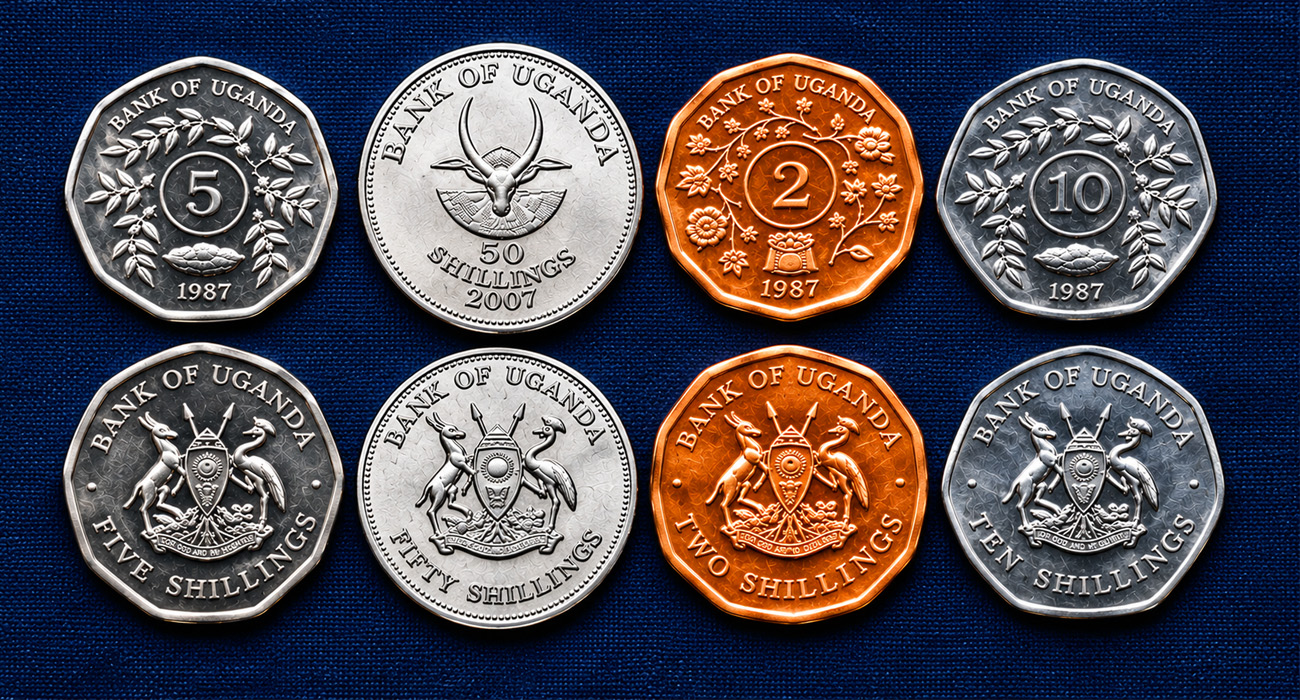
KAMPALA, Uganda – The Bank of Uganda (BoU) has reminded Ugandans that the Shs50 coin and other small currency denominations remain legal tender and should not be rejected in everyday transactions simply because of their low value.

In a public awareness message issued Thursday, Nov. 19, 2026, the central bank reaffirmed the legal status of nine coin denominations, following concerns over the reluctance of some traders and members of the public to accept smaller coins.
The bank identified the denominations as Shs1, Shs2, Shs5, Shs10, Shs50, Shs100, Shs200, Shs500 and Shs1,000, emphasizing that they remain part of Uganda’s official currency.
“Bank of Uganda issues coins in the denominations of Uganda Shillings 1, 2, 5, 10, 50, 100, 200, 500, and 1,000. All these coins are legal tender and should be accepted for transactions nationwide,” the bank stated.

The message, accompanied by the reminder “Money is precious, handle with care!” seeks to address a persistent problem in cash transactions, where some businesses and individuals are unwilling to accept coins they consider too small to be useful.
Although the Shs50 coin remains familiar to many Ugandans, its acceptance has become increasingly inconsistent in some everyday transactions. Smaller denominations, particularly Shs1, Shs2 and Shs5, are even less commonly encountered in ordinary retail trade.
The reluctance to accept these coins is partly linked to changes in purchasing power over time. As prices have risen, the smallest denominations have become less practical for purchasing goods individually, even though their legal status has not changed.
However, the central bank’s clarification draws a distinction between the purchasing power of money and its legal validity. A coin does not automatically cease to be legal tender simply because it is rarely used or can no longer purchase what it once could.
Under the Bank of Uganda Act, the central bank is responsible for issuing the country’s currency, including banknotes and coins. The law also provides the framework governing their recognition as legal tender.
The legal tender provisions, however, contain limits on the amounts that can be settled using particular coin denominations. This means the legal recognition of a coin does not necessarily require its acceptance in unlimited quantities for every payment.
For ordinary cash transactions, the bank’s reminder is particularly relevant to market vendors, retail shops, supermarkets, transport operators and other businesses that routinely receive cash payments and give customers change.
The refusal to accept smaller coins can create difficulties for consumers, particularly where prices or balances require exact change. It can also discourage the circulation of denominations that remain officially recognized as part of the national currency.
The latest communication is not the first time the central bank has addressed the issue. In March 2023, the Bank of Uganda also used its official communication channels to remind the public about the validity of the Shs50 coin.
Despite the renewed clarification, the bank has not announced the withdrawal of any of the nine denominations or introduced new rules governing their circulation.
The statement also does not indicate any new penalties or enforcement measures specifically targeting businesses that reject low value coins.
For now, the central bank’s message is clear: Uganda’s smaller coins remain part of the country’s currency system, and their declining use in everyday trade does not, by itself, make them invalid.
Section 23 of the Act sets the legal tender limit at Shs1,000 for payments made using coins worth Shs5 or more, and Shs500 for coins below Shs5, unless the bank’s board prescribes otherwise. The provision applies to coins that have not been tampered with.
The law also provides that the central bank may withdraw coins from circulation after giving at least 15 days’ notice in the Uganda Gazette. Once the notice period expires, the affected coins cease to be legal tender. The bank’s latest message did not announce such a withdrawal. Instead, it reinforced the continued validity of existing denominations, even as their practical use in daily transactions has declined.
No part of this publication or its digital content may be reproduced, distributed, published, broadcast, rewritten, or redistributed in whole or in part without prior written permission from Kalisho Info.
For inquiries, contact: kalishoinfo@gmail.com
Stay informed and ahead of the curve! Follow Kalisho Info for real-time updates and breaking news.