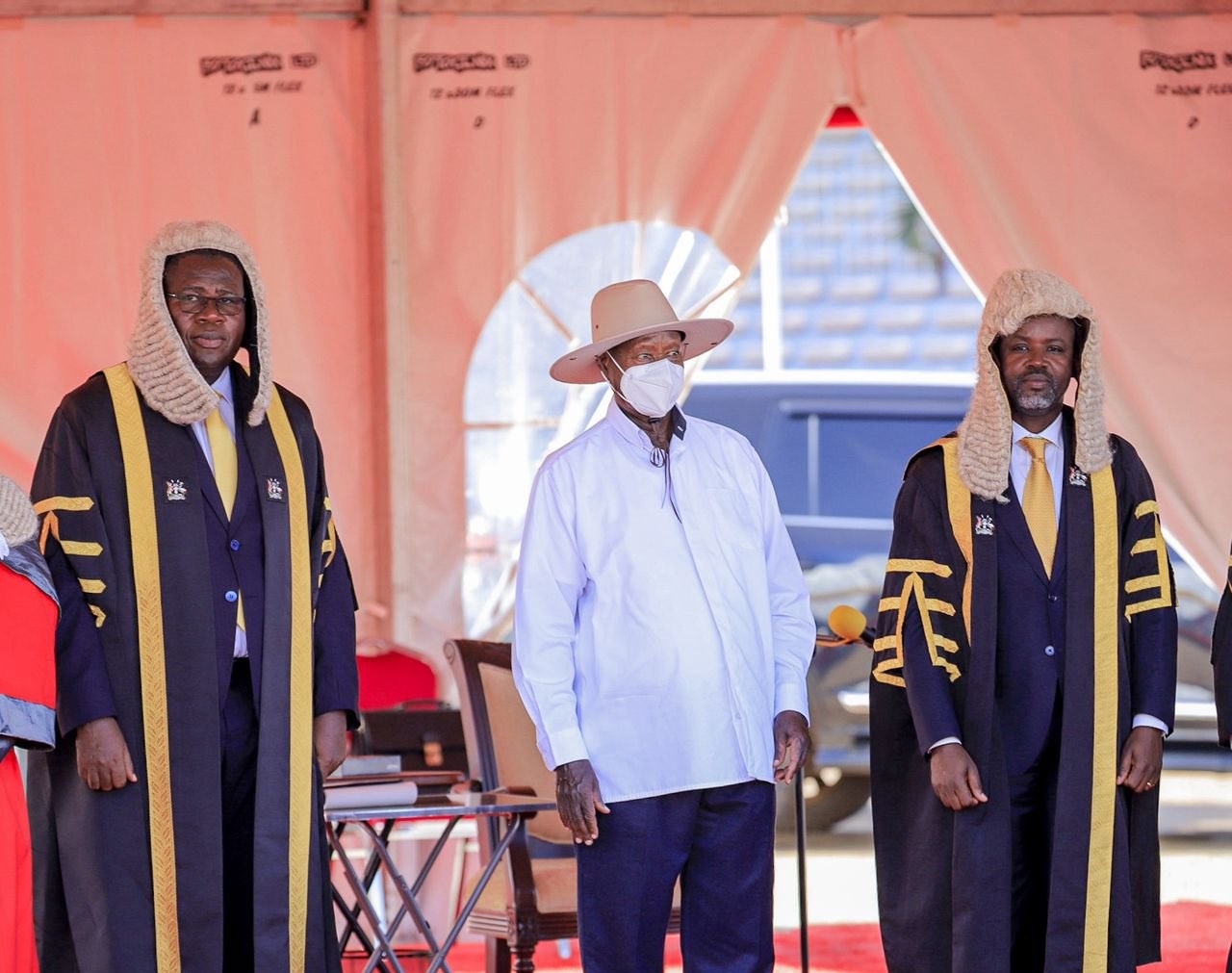


KAMPALA, Uganda — Ronald Balimwezo Nsubuga has defeated Erias Lukwago in the Kampala Lord Mayor race, ending Lukwago’s long run at City Hall and opening a new chapter in the capital’s politics. The result marks a major shift in leadership in a city where voters have often balanced protest politics with demands for better services.


Balimwezo, a civil engineer by training, rose through local government before entering national politics. He previously served as Nakawa Division mayor and later as Member of Parliament for Nakawa East. During that time, he chaired committees linked to city roads and urban services, building a reputation as a hands-on manager with a technical approach to Kampala’s persistent problems. His campaign focused on drainage, roads, garbage collection and accountability, themes that resonated with voters frustrated by flooding, congestion and poor sanitation.
Supporters say Balimwezo’s strength lay in blending professional training with grassroots politics. He promised to work closely with communities and technocrats to improve service delivery, while avoiding constant political confrontation. His win reflects a growing appetite among city residents for practical solutions alongside political representation.
Lukwago leaves office as one of Kampala’s most influential and controversial political figures. First elected Lord Mayor in 2011, the outspoken lawyer survived repeated clashes with central government and an attempted impeachment that was later blocked by court. Over more than a decade, he became a symbol of resistance for many urban voters and a constant critic of corruption and what he called the erosion of local democracy.

As Lord Mayor, Lukwago pushed for transparency in city finances, defended vendors and informal workers, and used the office to raise national constitutional issues. He also helped elevate Kampala’s voice in regional and international city forums. Even critics acknowledge that his tenure shaped the political character of the city and expanded civic debate, even when tangible service delivery gains were limited.
Those limits are closely tied to the Kampala Capital City Authority framework. Under the Kampala Capital City Authority Act, the Lord Mayor is the political head of the city and chair of the council but does not control day-to-day operations. Executive power rests with the Executive Director, a presidential appointee who oversees staff, budgets and implementation of policy. This structure has long been a source of tension, particularly during Lukwago’s time in office.
The Act also places checks on council decisions, requiring oversight by the minister responsible for Kampala and review by the Attorney General before ordinances take effect. Critics argue this reduces the Lord Mayor to a largely political figure with limited operational authority, while supporters say it ensures stability and coordination with central government.
Balimwezo now steps into the same constrained office, inheriting both Lukwago’s political legacy and the institutional hurdles that come with it. How he navigates the limits of the KCCA system, while delivering on promises of better services, will define his tenure. For Kampala residents, the vote signals change, but the structure of city governance means expectations will quickly meet reality.
No part of this publication or its digital content may be reproduced, distributed, published, broadcast, rewritten, or redistributed in whole or in part without prior written permission from Kalisho Info.
For inquiries, contact: kalishoinfo@gmail.com
Stay informed and ahead of the curve! Follow Kalisho Info for real-time updates and breaking news.