
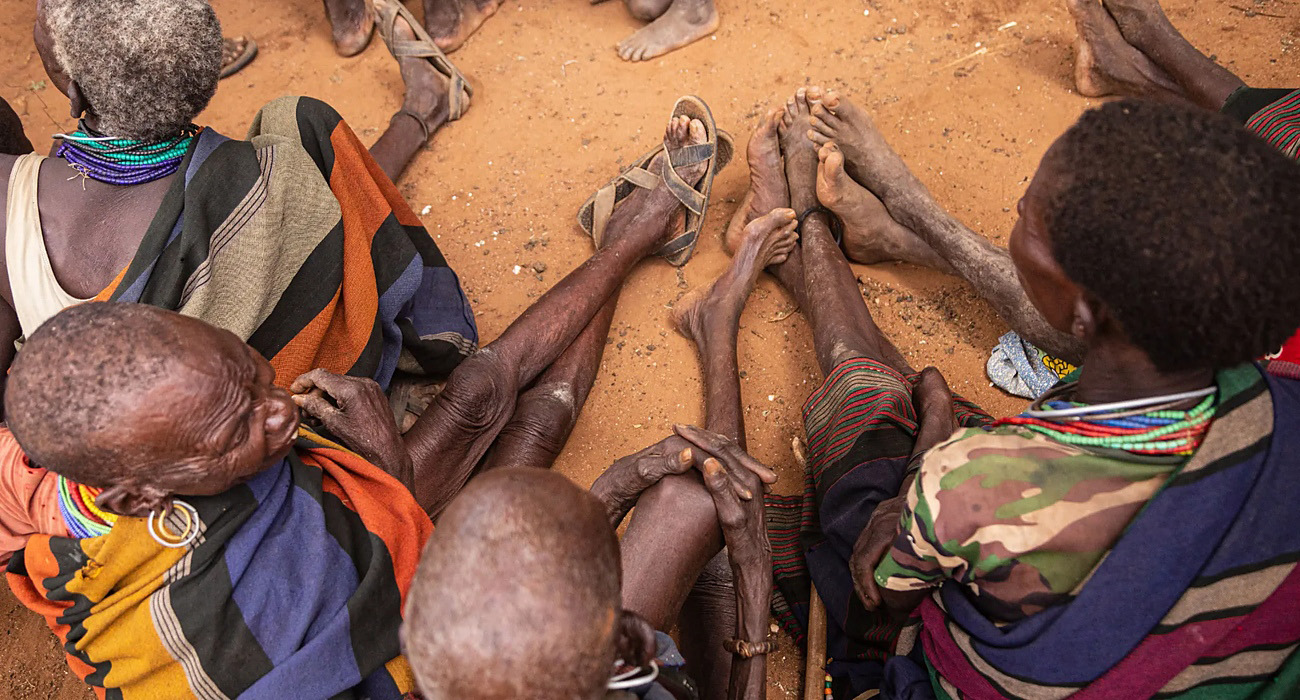
PARLIAMENT, Uganda – Parliament on Wednesday adopted the report of the Committee on Presidential Affairs on the food and famine crisis in Karamoja, amid renewed calls for the government to address the underlying causes of hunger in the subregion. The government confirmed that Shs50 billion had been released to purchase relief food for affected communities.

During the debate, Second Deputy Prime Minister Dr. Crispus Kiyonga described the persistence of hunger in Karamoja as an embarrassment, nearly four decades after the National Resistance Movement (NRM) identified the region’s challenges among its priorities upon assuming power in 1986.
“As a revolutionary, I feel embarrassed that we haven’t solved the problem of Karamoja,” Kiyonga told the House. “When we came into power, part of our programme was to solve the challenge of Karamoja.”
Kiyonga invited all MPs from Karamoja to a meeting at the Office of the Prime Minister (OPM) on Friday, Nov. 27, to discuss interventions in the subregion. The meeting follows an earlier gathering in Karenga that failed to achieve quorum, with a subsequent meeting with President Yoweri Museveni also planned.

Kiryowa Kiwanuka informed Parliament that Museveni had directed the release of funds for food purchases during the last Cabinet meeting. Kiyonga confirmed that Shs50 billion had been released and assured lawmakers that additional resources would be provided if necessary.
Beyond emergency food assistance, Cabinet resolved to provide farmers with seeds at the onset of the next rainy season. The government also plans to invest in irrigation and restore existing valley dams to support agricultural production and improve access to water.
The committee’s report, presented last week by its chairperson, Martin Ojara Mapenduzi, painted a grim picture of food insecurity across Karamoja. Figures from the Integrated Food Security Phase Classification (IPC) cited in the report indicate that about 673,000 people faced crisis levels of hunger or worse between August and October 2026.
The number is projected to rise to about 679,000 between November 2026 and February 2027. Prolonged drought reportedly destroyed an estimated 98% of crops across the subregion, with the next significant harvest not expected until June 2027.
The committee found that previous government interventions had fallen short of addressing the immediate needs of affected communities. The OPM distributed 20 kilograms of maize flour and 10 kilograms of beans to each of the 313,987 registered households across Karamoja’s nine districts.
According to local leaders, the food distributed was sufficient to sustain a family of six for about two weeks. A second round of distribution promised for October had not taken place by the time the committee conducted its assessment.
Thousands of households also missed out on relief food because the distribution exercise relied on 2024 Uganda Bureau of Statistics (UBOS) data instead of updated assessments by district disaster management committees. Lawmakers further questioned why Shs5 billion of the Shs45 billion previously allocated for emergency relief remained unspent.
The report also exposed significant failures in government investments in water infrastructure. Despite expenditure of Shs8.7 billion on 106 valley tanks and another Shs45 billion on five dams, the committee reported that none of these facilities was functional, while some could not be located.
In Kotido District, the committee found that 54 valley dams had dried up. Longor Dam, constructed in 1925 using manual labour, was reported to be the only dam still holding water.
The committee recommended an audit of the water projects before the end of the current financial year and the desilting of existing facilities ahead of the 2027 rainy season. It also called for proper feasibility studies and adequate maintenance budgets before undertaking new water projects.
Lawmakers further urged the government to introduce free meals in schools across Karamoja, citing the impact of hunger on school attendance and retention. The committee highlighted inadequate education infrastructure, particularly in Kaabong District, where many communities lack access to schools.
Bughendera County MP Christopher Kibanzanga called on Parliament to withhold approval of the national budget unless the government allocated at least Shs100 billion specifically for Karamoja. He also called for a comprehensive development master plan covering 10 years to address the region’s challenges.
Other recommendations included providing drought resistant seeds, expanding permanent water sources, operationalising the Contingencies Fund at district level and accelerating the implementation of the Karamoja Integrated Development Plan.
While the release of an additional Shs50 billion is expected to address immediate food shortages, Wednesday’s debate highlighted the limitations of repeated emergency interventions. Lawmakers maintained that lasting food security in Karamoja would require sustained investment in agriculture, water infrastructure, education and greater accountability for public resources.
No part of this publication or its digital content may be reproduced, distributed, published, broadcast, rewritten, or redistributed in whole or in part without prior written permission from Kalisho Info.
For inquiries, contact: kalishoinfo@gmail.com
Stay informed and ahead of the curve! Follow Kalisho Info for real-time updates and breaking news.