
KAMPALA, Uganda — Uganda’s medical interns remain largely absent from hospital wards as a dispute over welfare support and mandatory training continues to put pressure on the country’s public health system.
More than 2,400 newly graduated doctors, dentists and other health professionals have been placed by the Ministry of Health for the 2026/27 internship cycle. The official reporting period ran from Aug. 3 to Aug. 14, but many interns have not reported, citing uncertainty over financial support during the one year of supervised clinical training required before they can obtain full professional licences.
The dispute follows government efforts to review the cost of supporting the growing number of medical interns graduating from public and private universities.
The government has argued that the previous system, under which interns received about Shs1 million a month, is becoming difficult to sustain as the number of graduates rises. In 2024, the Ministry of Health told Parliament that the annual budget allocation for medical interns and senior house officers was about Shs35.7 billion.

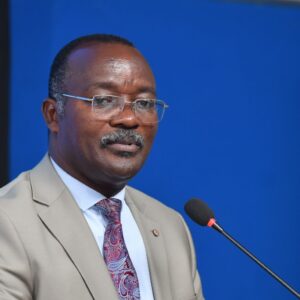
Health Minister Chris Baryomunsi addressed the dispute in Parliament on Wednesday, saying government is still consulting on how the new arrangements should be implemented.
Baryomunsi said the ministry has already issued placement lists and that he personally spent about six hours meeting representatives of the interns.
He acknowledged that the interns have genuine welfare concerns but said government expects a final position on the matter next week.

At the same time, Baryomunsi stressed that internship remains a mandatory stage of professional training for graduates who want to practise as fully licensed health professionals.
He also rejected suggestions that Uganda’s health system is entirely dependent on interns, saying hospitals can continue operating without them. However, he acknowledged that interns contribute to service delivery while receiving supervised training and should not be treated as replacements for permanently employed health workers.
The minister also claimed that unnamed external forces were advising some graduates not to report for internship. He did not identify the individuals or organisations he was referring to.
The remarks add another dimension to a dispute that has already drawn the attention of Parliament, medical professionals and health sector stakeholders.
The Uganda Medical Association has backed the interns and demanded urgent action on their welfare and deployment.
Following an extraordinary general assembly attended by about 4,500 doctors, UMA issued a 14 day ultimatum to government to resolve the outstanding issues or face possible industrial action.
The association is demanding a monthly allowance of Shs4 million for interns, which it says is about 75% of a medical officer’s salary. It is also calling for all 2,417 eligible interns to be deployed to accredited facilities without discrimination, payment of outstanding arrears owed to previous interns and senior house officers, and broader consultation on the government’s internship policy.
The government’s position is that the rapid expansion of medical training has created a financial challenge.
The number of health training institutions and graduates has grown sharply over the years, making it increasingly difficult for government to maintain the previous funding model. The Ministry of Health has previously said Uganda now produces between 1,500 and 2,000 interns annually, compared with about 200 in the past.
The government has also considered different forms of support for interns, including providing full support to government sponsored graduates while assessing how privately sponsored graduates could be supported.
The standoff is unfolding against the backdrop of long standing staffing shortages in public hospitals.
Lawmakers have raised concerns about facilities operating with far fewer health workers than their approved staffing structures. Entebbe Regional Referral Hospital, for example, has been cited as operating at about 21% of its required staffing level.
Interns traditionally provide supervised clinical services in emergency units, surgical wards, labour wards and other busy departments. Their continued absence therefore risks increasing the workload on existing staff.
For patients, the dispute could have consequences beyond the question of allowances.
Public hospitals already handle large numbers of patients with limited staff and resources. A prolonged shortage of interns could increase waiting times and put additional pressure on doctors, nurses and other health workers.
For the interns, however, the issue is also one of basic welfare. Many say they cannot afford accommodation, transport and meals while undertaking full time clinical work without predictable financial support.
The government therefore faces a difficult balancing act: addressing the welfare concerns of newly trained health professionals while controlling the cost of a system that is already under financial pressure.
With UMA’s 14 day ultimatum running and the ministry promising a final position next week, attention is now focused on whether the consultations will produce an agreement that allows interns to return to hospitals without creating a financial commitment government considers unsustainable.
Until then, thousands of newly trained health professionals remain caught between a mandatory step toward full professional practice and an unresolved dispute over how they will be supported during that training.
No part of this publication or its digital content may be reproduced, distributed, published, broadcast, rewritten, or redistributed in whole or in part without prior written permission from Kalisho Info.
For inquiries, contact: kalishoinfo@gmail.com
Stay informed and ahead of the curve! Follow Kalisho Info for real-time updates and breaking news.