
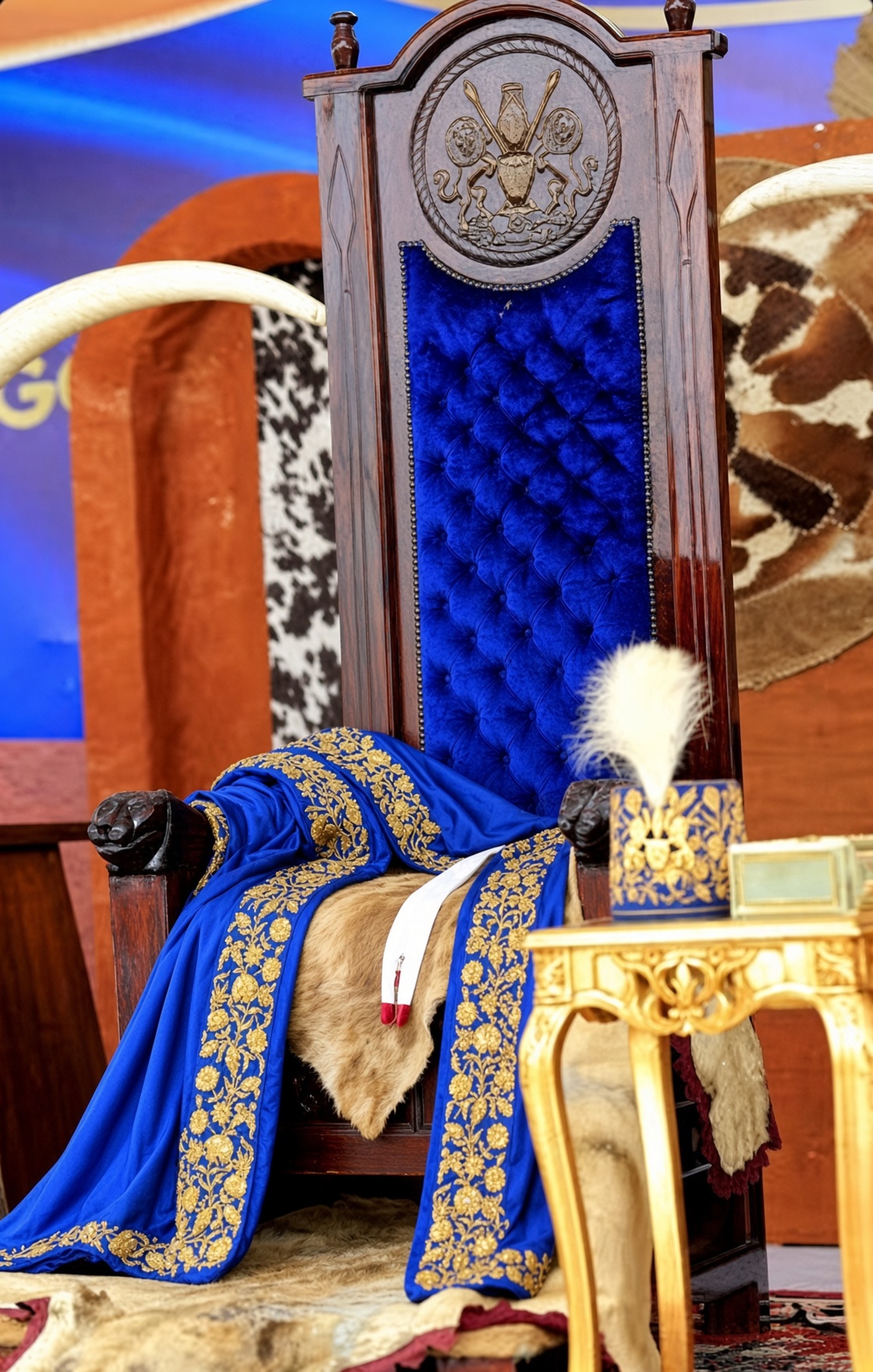
You do not simply become king in Tooro. Kingship has always been something to be claimed, defended and, at times, fought for.

That contest is not new. It is woven into the history of the kingdom itself.
Around 1830, Prince Kaboyo broke away from Bunyoro Kitara, seized his father’s royal herds and declared himself king while his father was still alive. His move was more than a personal rebellion. It was a struggle to establish a new royal house in Tooro.
After Kaboyo’s death, the struggle became even more intense. His son, Kazana Ruhaga, took the throne but was later killed by his own brother, Nyaika Kasunga Kyebambe, in a conflict remembered as the Nyaikas. A succession of short and contested reigns followed until Kabalega of Bunyoro overran Tooro in the 1870s and scattered the royal court.

When the monarchy was restored under Kasagama in 1891, the question of who had the right to rule had not disappeared. Another prince returned from exile to stake his own claim.
Over time, however, the contest for the throne changed. What was once fought with real weapons became part of royal ritual.
Tooro tradition holds that after an heir is identified and funeral rites are completed, a delegation confronts any pretender to the throne. The battle is no longer meant to cause bloodshed. Instead, the old struggle is performed as a mock war at the Mugabate gate.
That ritual was staged in 1995 when three year old King Oyo was installed. An “enemy force” led by a rebel prince blocked the palace entrance until supporters of the child king forced their way through.
The symbolism was powerful. Tooro was reminding itself that kingship had historically involved contest, even as the kingdom transformed that contest into ceremony.
More than three decades later, that old pattern appears to be returning, only this time without the protection of ritual.
King Oyo Nyimba Kabamba Iguru Rukidi IV died in the United States on Aug. 27, 2026, at the age of 34, after treatment for cancer. His death ended a 31 year reign that began when he was only three years old. His burial is scheduled for Sept. 12 at the Karambi royal burial grounds in Fort Portal, on the anniversary of his coronation.
Almost immediately after his death, the question of succession became contested.
The first major claim was that Oyo had left a secret son who was to inherit the throne. Tooro Prime Minister Calvin Armstrong Rwomiire said the continuity of the crown was assured and that a prince would be revealed “at the appropriate time.”
President Yoweri Museveni later said the late king had left a young heir born out of wedlock.
But clan leaders publicly disputed whether they had ever been informed about a biological child.
A 2022 will attributed to Oyo and later cited by his family names a son as the first heir. It then provides a fallback line involving Prince Yoweri Komwiswa, Prince Solomon Nyaika and Omusuuga Charles Kamurasi.
The identity of the son, however, has not been publicly confirmed.
That uncertainty opened the door to a wider succession contest.
A 21 member Babiito succession committee, chaired by clan head Omusuuga Charles Kamurasi, was tasked with identifying a successor. In early September, journalist Andrew Mwenda reported that the committee had settled on Prince George Desmond Kamurasi, a 36 year old first cousin of Oyo, grandson of King George Rukidi III, and a London based amateur footballer and coach with SE Dons.
Mwenda reported that 15 of the 18 members present had supported him.
But the claim quickly became complicated. The Omusuuga later distanced himself from the public announcement, while reports said George Kamurasi had declined the throne, preferring his family life and sporting career in Britain.
The succession committee then turned to another royal line.
On Sept. 9, at Karuziika Palace, the committee announced Prince Edward Rukidi Kijanangoma, a news anchor and editor at Uganda’s state broadcaster, UBC, as the new Omukama. Nineteen of the 21 members were reported to have endorsed him.
Kijanangoma is the son of the late Prince Christopher Paul Kijanangoma and a grandson of Omukama Sir George David Rukidi III, from the Kijanangoma branch of the Babiito.
Reports said the clan had relied on the will of an earlier king, Patrick David Matthew Olimi Kaboyo II, which recognised that line.
But formal enthronement has not yet taken place.
And almost immediately, the announcement was rejected by Oyo’s closest relatives.
Princess Ruth Komuntale said the next person in line was her brother’s son and that the family had been reviewing Oyo’s 2022 will with clan leaders and government representatives, including Gender Minister Maj. Gen. Henry Tumukunde, before any proclamation.
Queen Mother Best Kemigisa said the will was read at the palace on Sept. 9 and that those present had agreed to reconvene the following day. Instead, she said, a group of clan members announced their own king that evening while her son’s body was still lying beside them.
She also said royal guards had been removed and security deployed around the palace, leaving the family under what she described as house arrest days before the burial.
Princess Elizabeth Bagaaya has also backed the family’s objection.
By Sept. 10, the dispute had taken another turn. Local reports said Kijanangoma himself had reservations about taking the throne, citing his born again Christian beliefs and concerns about the traditional expectations surrounding royal marriage and producing an heir.
That claim has not been confirmed by an official clan statement.
Tooro’s premier has meanwhile urged both sides to pause the fight until after Oyo’s burial, warning that the dispute could divide the kingdom at a time when it is mourning. He has not endorsed either side.
The weapons have changed.
There are no armies marching through the kingdom. There are no princes seizing royal herds or brothers killing brothers for the throne.
Instead, the battle is being fought through wills, committee votes, competing announcements, televised family statements and the presence of state security around a palace in Fort Portal.
But beneath those modern methods is an old pattern.
A king dies. The throne becomes vacant. More than one royal line emerges. One side argues that tradition has already settled the question. Another insists that the process is not complete. The kingdom waits for a decision while the royal family and clan leadership struggle over who has the authority to make it.
That is why Tooro’s current succession dispute should not be viewed simply as an unfortunate disagreement following the death of King Oyo.
It is a reminder of something much deeper in Tooro’s history.
The kingdom was born out of a contest over kingship. Its early history was marked by rival claims, short reigns, exile, violence and competing royal lines. Eventually, the struggle was turned into ceremony, with the mock battle at the Mugabate gate preserving the memory of an age when the fight for the crown was literal.
Today, the battle has returned in a different form.
The real test is no longer whether one prince can defeat another at the palace gate. It is whether Tooro’s royal family, clan leaders and political authorities can settle the question of succession without allowing an old tradition of contest to become a new source of division.
Tooro does not need to forget its history.
But it must decide whether history will remain a lesson or become a pattern that the kingdom keeps repeating.
For now, the crown remains contested.
And in Tooro, that is perhaps the least surprising part of the story.
No part of this publication or its digital content may be reproduced, distributed, published, broadcast, rewritten, or redistributed in whole or in part without prior written permission from Kalisho Info.
For inquiries, contact: kalishoinfo@gmail.com
Stay informed and ahead of the curve! Follow Kalisho Info for real-time updates and breaking news.