
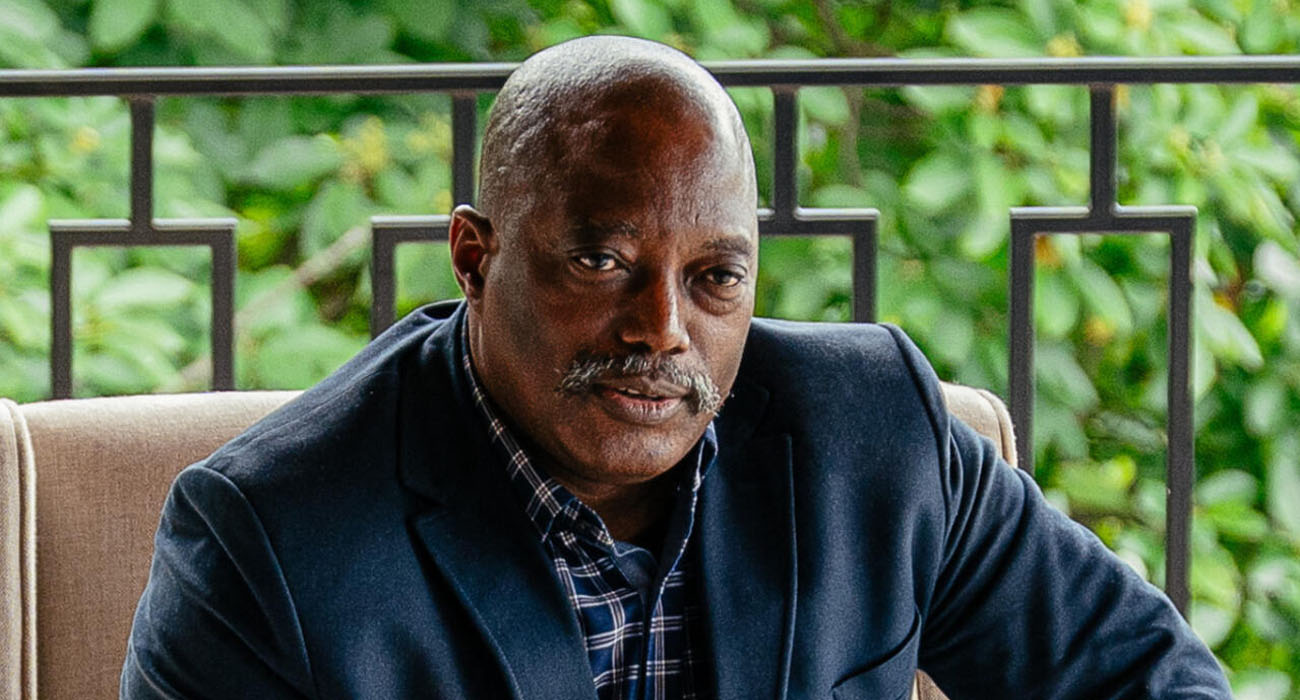
GOMA, Democratic Republic of the Congo — Former President Joseph Kabila was named leader of a new political and military alliance on Oct. 12, 2026, in Goma, the capital of North Kivu province.

The Front for the Refounding of the Nation (FRN) brings together the Alliance Fleuve Congo (AFC), the March 23 Movement (M23) and other armed groups opposed to President Félix Tshisekedi’s government.
The alliance was unveiled at an event attended by Kabila and senior figures from the rebel coalition. It is presented as succeeding the AFC, a political umbrella formed in December 2023 and coordinated by Corneille Nangaa, a former president of the Independent National Electoral Commission.
The AFC has been allied with the M23, whose fighters captured Goma in late January 2025 before advancing into Bukavu, the capital of South Kivu province.

Under the reported FRN leadership structure, Kabila will serve as president, with Nangaa, Bertrand Bisimwa, a senior M23 political figure, and Sultani Makenga, the movement’s longtime military commander, taking senior deputy roles.
Makenga is also reported to retain his position as chief of staff of the Revolutionary Congolese Army (ARC).
Freddy Kaniki, also reported as Kainiki and linked to the Twirwaneho armed group, has been mentioned for a senior position, either as secretary general or vice president. Benjamin Bonimpa has also been named in some reports as deputy secretary general. However, initial accounts differ on some titles and responsibilities, while the full membership and organizational structure of the alliance remain unclear.
The announcement came three days after Kabila delivered a public address on Oct. 9, calling for an inclusive national dialogue to address the country’s crisis and criticizing the government’s approach.
A June 2026 report by the U.N. Group of Experts on the Democratic Republic of the Congo had anticipated a possible restructuring of the AFC/M23 coalition, including a potential name change and a more prominent role for Kabila. The experts cited his increased presence in areas controlled by the coalition since May 2025 and his meetings with its leaders.
The report also pointed to internal differences within the coalition. While some figures reportedly favored broader ambitions extending toward Kinshasa, others preferred to limit military operations to the Kivu provinces.
Kabila governed the DRC from 2001 to 2019 after succeeding his father, Laurent-Désiré Kabila, who was assassinated in 2001.
On Sept. 30, 2025, the High Military Court in Kinshasa sentenced Kabila to death in absentia after convicting him of treason, war crimes, crimes against humanity and related offenses, including participation in an insurrectional movement. The case was linked to allegations of support for the M23.
The court also ordered him to pay damages estimated in reports at between $33 billion and $50 billion to the state and affected provinces. Kabila did not attend the proceedings and dismissed the charges as politically motivated. He has denied having a formal alliance with the rebels while calling for dialogue and criticizing the Tshisekedi administration.
The court ordered his arrest, but his whereabouts have not been publicly confirmed beyond reported appearances in areas controlled by the coalition.
The eastern DRC conflict has intensified since early 2025, with the AFC/M23 controlling significant territory in North and South Kivu, including Goma and Bukavu. The M23, which reemerged in 2021 and 2022 after earlier rebellions, has been accused by the Congolese government, U.N. experts and several Western governments of receiving military support from Rwanda. Kigali denies the allegations.
Other groups linked to the coalition include Twirwaneho, also known as MRDP-Twirwaneho, a Banyamulenge-linked self-defense force operating in the highlands of South Kivu.
Efforts to end the fighting have included the Doha process between the Congolese government and the AFC/M23, which produced a July 2025 declaration on a permanent ceasefire and further talks. Separate diplomatic efforts involving Rwanda have been facilitated by the United States and the African Union.
Fighting has continued in several areas despite the negotiations, contributing to a major humanitarian crisis that has displaced millions of people.
Kabila’s appointment places him at the head of a restructured alliance that retains elements of the former AFC leadership while incorporating other armed groups. Questions remain about internal power sharing, the future status of the M23 name and the alliance’s commitment to existing peace efforts.
It is also unclear whether the restructuring signals a change in military and political strategy or is primarily a reorganization as fighting and diplomatic negotiations continue. Initial reports had not detailed official reactions from Kinshasa or international mediators.
No part of this publication or its digital content may be reproduced, distributed, published, broadcast, rewritten, or redistributed in whole or in part without prior written permission from Kalisho Info.
For inquiries, contact: kalishoinfo@gmail.com
Stay informed and ahead of the curve! Follow Kalisho Info for real-time updates and breaking news.