
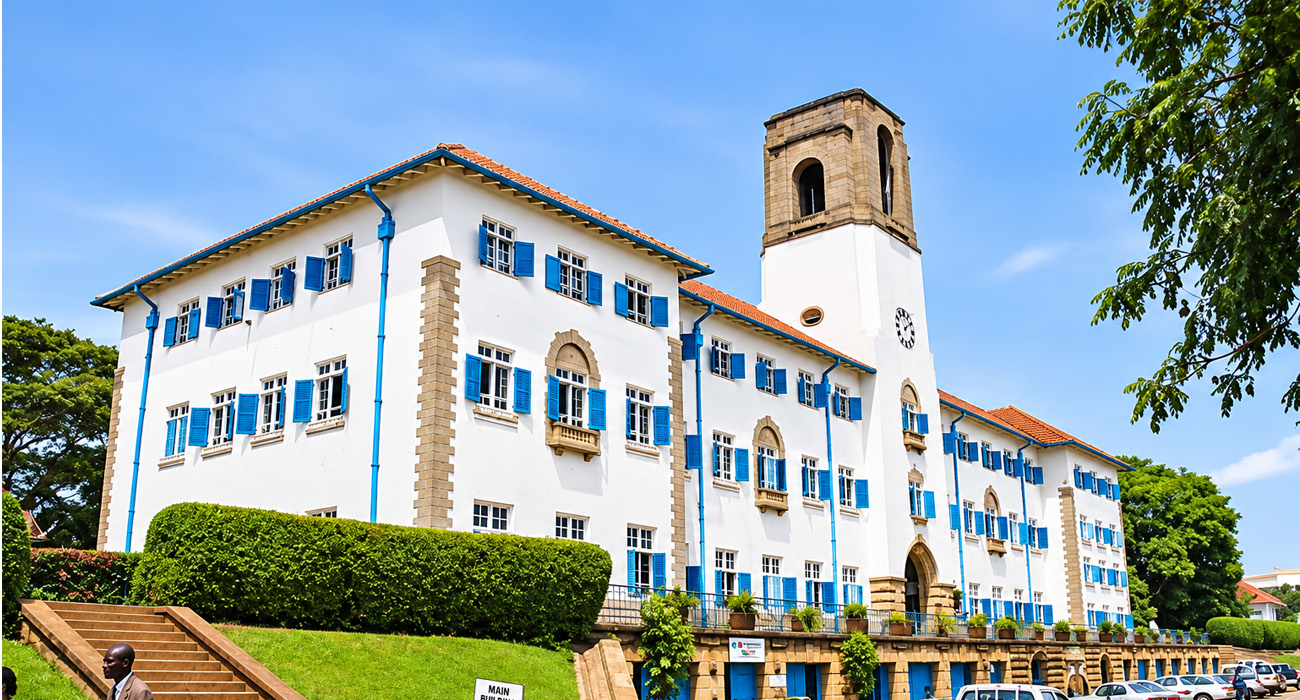
KAMPALA, Uganda – Hunger has emerged as a serious welfare crisis at Makerere University, with some students reportedly collapsing, missing examinations and requiring hospital treatment after going for extended periods without adequate food.

The situation has prompted Uganda’s oldest university to launch an emergency feeding programme in partnership with the Rotary Club of Makerere Passport, targeting vulnerable students struggling to afford meals during the examination period.
University Vice Chancellor Prof. Barnabas Nawangwe acknowledged the severity of the problem, revealing that some students had been transported to hospital by ambulance because of hunger. He said the university could no longer ignore the suffering of students whose financial difficulties were affecting their education.
The intervention, named Food for Peace, was officially launched Nov. 11, with an initial target of 206 students identified through a needs assessment conducted by the Makerere Rotary Peace Centre. The programme will provide meals to affected students regardless of whether they are government or privately sponsored.

However, the crisis extends beyond the immediate beneficiaries. Nawangwe acknowledged that hundreds of students leave Makerere every year because of financial difficulties, while others remain enrolled but struggle to meet basic living expenses.
For many students, the challenge is no longer simply paying tuition. It is surviving from one day to the next, particularly toward the end of the semester when money received from parents, guardians or government allowances has been exhausted.
The university’s 92nd Guild President, Gracious Kadondi, has been among those raising concerns about the situation. She said students receiving government sponsorship often exhaust their allowances before examinations begin, leaving them unable to afford regular meals.
Kadondi, herself a government-sponsored student, disclosed that she had previously missed lectures and examinations because of financial hardship. She said students had petitioned Parliament over the problem and welcomed the university’s intervention as a step toward addressing their concerns.
The financial pressure is particularly evident in communities surrounding Makerere, including Kikoni, Wandegeya, Nankulabye and Kasubi, where students increasingly depend on inexpensive foods such as chapati, cassava and Rolex to survive.
A basic plate of rice, chapati, chips and beans costs about Shs3,500 at some food outlets near the university. Meals containing beef, chicken or fish are considerably more expensive, leaving students with limited resources to choose between cheaper food and skipping meals altogether.
The problem is also supported by academic research. A study published in June 2026 by researcher Kikomeko Joseph examined welfare challenges among government-sponsored Makerere students. Based on surveys involving 370 undergraduates, the study found that 74% of respondents reported skipping meals.
The research also identified poor housing conditions, psychological distress and financial vulnerability among affected students. It warned that inadequate financial support could expose some students to exploitative relationships, risky borrowing and academic difficulties. However, the findings reflect the students surveyed and should not be interpreted as representing every student at Makerere.
The hunger crisis has consequently raised wider questions about whether existing student support arrangements reflect the actual cost of living in Kampala. Although government sponsorship provides financial assistance to eligible students, rising food prices, accommodation costs and other essential expenses can quickly consume the available money.
Beyond the immediate physical effects, inadequate nutrition threatens academic performance. Students who attend lectures hungry may struggle to concentrate, while those forced to miss classes or examinations risk falling behind despite having secured places at the university.
Nawangwe has also warned that financial desperation can expose female students to exploitation as they struggle to meet basic needs. The concern highlights how hunger can develop into a broader problem affecting student safety, dignity and educational opportunities.
The Food for Peace programme offers immediate relief, but its organisers recognise that feeding a few hundred students during examinations cannot resolve a problem rooted in persistent financial hardship.
Rotary International Director for Africa Emmanuel Katongole has pledged Shs5 million annually toward the initiative, while organisers are seeking an initial Shs10 million to support the first phase. The Rotary Club of Makerere Passport also intends to establish a sustainable fund through contributions from alumni, companies and other partners.
The university’s Dean of Students, Dr. Winfred Kabumbuli, has welcomed the initiative and pledged to mobilise internal support. Organisers hope to expand assistance beyond the current examination period, allowing more students to benefit in subsequent semesters.
Nevertheless, the developments have renewed calls for a lasting response from the university administration and government. Reviewing student allowances, introducing affordable meal programmes and strengthening welfare support are among the measures that could reduce the pressure on financially vulnerable students.
The crisis also presents a difficult question for Uganda’s higher education system: What does access to university education mean when students who have successfully earned admission cannot afford the food necessary to remain healthy and complete their studies?
For Makerere, the immediate priority is ensuring that vulnerable students receive meals and complete their examinations. But the bigger challenge remains unresolved. Unless the underlying financial pressures are addressed, hunger could continue to undermine the education of students whose greatest struggle is no longer passing examinations, but finding something to eat.
No part of this publication or its digital content may be reproduced, distributed, published, broadcast, rewritten, or redistributed in whole or in part without prior written permission from Kalisho Info.
For inquiries, contact: kalishoinfo@gmail.com
Stay informed and ahead of the curve! Follow Kalisho Info for real-time updates and breaking news.