
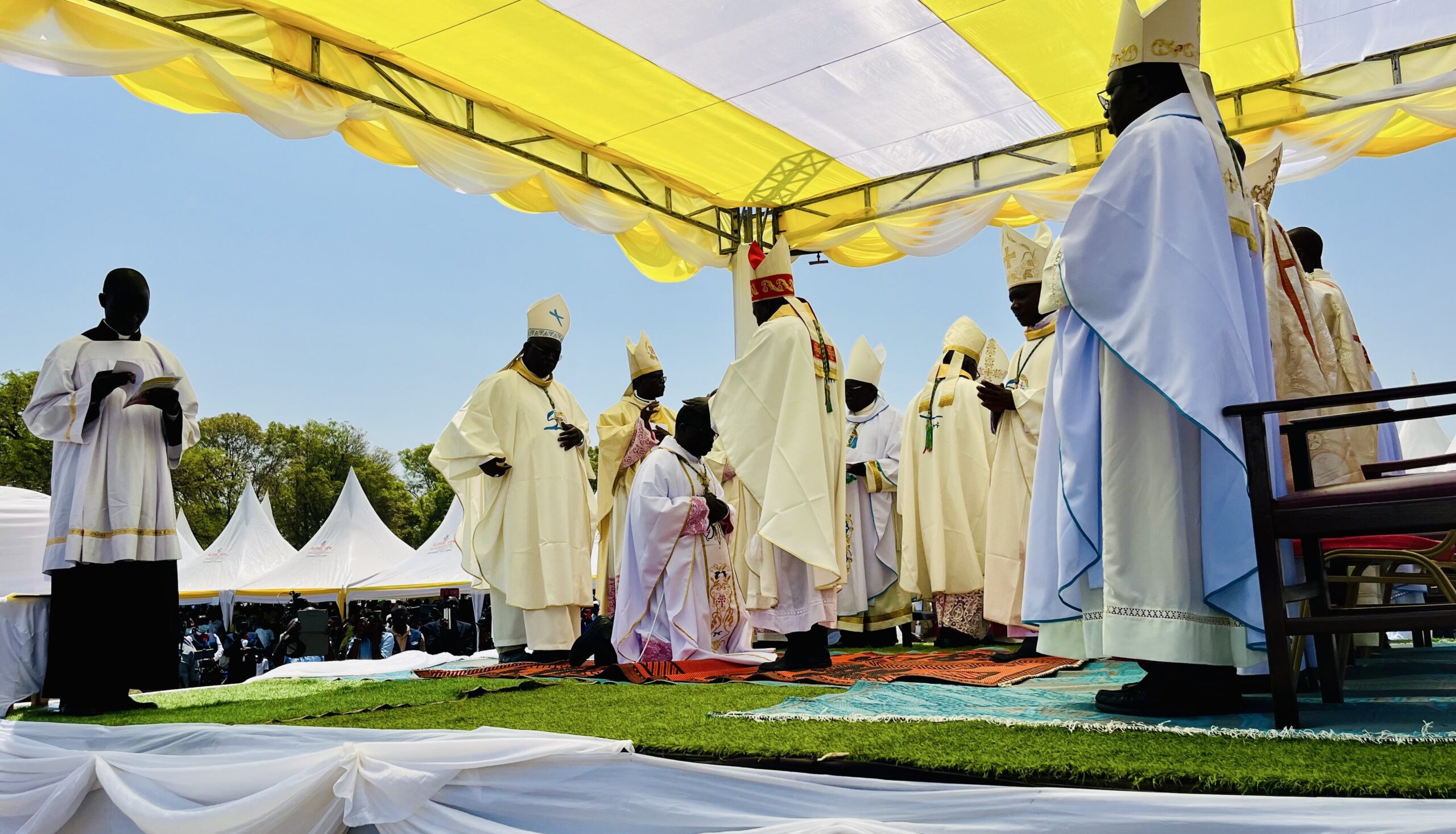
One of the enduring strengths of the Catholic Church is its carefully structured process for appointing bishops. Rather than being an election or a political appointment, the selection of a bishop is a prayerful, confidential, and thorough process that seeks to identify the most suitable shepherd for the faithful.

A bishop holds the highest degree of the Sacrament of Holy Orders. He shares in the fullness of Christ’s priesthood, while priests and deacons participate in that ministry in different ways. Through apostolic succession, every Catholic bishop traces his episcopal ordination back to the Twelve Apostles, ensuring an unbroken continuity of leadership from the earliest days of the Church.
Bishops serve in different capacities depending on the responsibilities entrusted to them. A bishop who leads a diocese is known as the diocesan bishop. One who heads an archdiocese is an archbishop. (Arch)Bishops who head (Arch)Dioceses are known as Ordinaries. Some bishops are created cardinals and assist the Pope, including participating in the election of a new pope. The Bishop of Rome, the successor of St. Peter, is the Pope and serves as the head of the Catholic Church throughout the world.
Because bishops possess the fullness of Holy Orders, only they can ordain deacons, priests, and other bishops.

Since we previously prepared an article on what happens when a bishop dies, for this particular article, we shall explore what happens for a bishop to retire.
Retirement at 75
Canon Law requires every diocesan bishop who reaches the age of 75 to submit his resignation to the Pope (Canon 401 §1). However, the bishop remains in office until the Holy Father accepts the resignation. This means that reaching 75 does not automatically create a vacancy.
Preparing for a Successor
Well before a bishop retires, preparations for his eventual replacement are already underway.
Every diocesan bishop periodically submits a confidential list known as a terna to the Holy See. The terna contains the names of three priests whom he considers suitable candidates for the episcopacy. These recommendations are reviewed and updated regularly, usually every three years.
The appointment of a bishop involves three principal authorities: the Apostolic Nuncio, the Dicastery for Bishops in Rome, and ultimately the Pope.
The Apostolic Nuncio serves as the Pope’s representative in a country and coordinates the process locally. The Dicastery for Bishops is the Vatican department responsible for assisting the Holy Father in the appointment of bishops across much of the world. It studies candidates, reviews recommendations, and advises the Pope before he makes the final decision.
The Selection Process
Once a bishop submits his resignation and it is expected that a successor will be needed, the Apostolic Nuncio begins gathering information.
He first reviews the existing terna and prepares detailed reports on the candidates. He also conducts confidential consultations with people who know the candidates well, including bishops, priests, religious, and selected lay faithful. These consultations help assess each candidate’s character, pastoral leadership, theological soundness, administrative ability, and overall suitability.
At the same time, the nuncio requests a detailed report on the condition and pastoral needs of the diocese. If the appointment is intended to replace a retiring diocesan bishop, the retiring bishop’s recommendations are also carefully considered.
After completing his investigation, the nuncio prepares an extensive report, often about 20 pages long. He presents three candidates in alphabetical order, indicating his preferred choice, and forwards the entire dossier to the Dicastery for Bishops in Rome.
The Role of the Dicastery for Bishops
Once the documentation reaches Rome, officials of the Dicastery carefully examine every aspect of the case.
If the appointment concerns the transfer or promotion of an existing bishop, the matter may be handled by the prefect and senior officials. If the appointment involves naming a priest as a bishop for the first time, the members of the Dicastery normally discuss the case during one of their regular meetings, usually held twice each month.
Following discussion, the members vote on the candidates. They may endorse the nuncio’s recommendation, choose another candidate from the terna, or request that an entirely new list of candidates be prepared.
The Pope Makes the Final Decision
The recommendations are then presented to the Pope during a private audience.
The Holy Father is not bound by the recommendations. He may approve the preferred candidate, choose another name from the terna, request additional information, or ask that the process begin again with new candidates.
Once the Pope has made his decision, the Dicastery informs the Apostolic Nuncio.
The nuncio then privately contacts the chosen priest or bishop and asks a simple but significant question: whether he accepts the appointment. Only after the candidate gives his consent does the Vatican prepare the official announcement.
From the time a diocese becomes vacant until a new bishop is appointed, the process often takes between six and eight months, although it can sometimes take longer.
From Appointment to Installation
If the appointed man is already a bishop serving elsewhere, he is commonly referred to as the Bishop Designate of his new diocese. If he is a priest who has not yet been ordained a bishop, he is known as the Bishop Elect.
A priest appointed as bishop must receive episcopal ordination before assuming office. A bishop who is transferred from another diocese does not require another ordination because episcopal ordination is received only once.
Before exercising the authority of his new office, the bishop must formally take canonical possession of the diocese, as required by Canon 382.
A bishop who is already ordained should normally take canonical possession within two months of his appointment. If the appointee is still a priest, he should be ordained a bishop within three months and take canonical possession of the diocese within four months.
The Installation Ceremony
The installation of a new bishop is one of the most significant celebrations in the life of a diocese. It is ordinarily held in the cathedral, the mother church of the diocese.
During the ceremony, the Apostolic Nuncio, or another papal representative, presents the Pope’s Apostolic Letter of Appointment to the College of Consultors in the presence of the diocesan Chancellor. The new bishop is then led to the cathedra, the bishop’s chair, which symbolizes his teaching and governing authority.
The moment he takes his seat in the cathedra, he officially assumes pastoral leadership of the diocese. The celebration continues with the Holy Mass, marking the beginning of his ministry as the new shepherd of the local Church.
The appointment of a Catholic bishop is therefore far more than an administrative exercise. It is a careful, confidential, and prayerful discernment involving the local Church, the Apostolic Nuncio, the Vatican, and ultimately the Holy Father, all with the aim of ensuring that each diocese receives a faithful successor of the Apostles to lead God’s people.
No part of this publication or its digital content may be reproduced, distributed, published, broadcast, rewritten, or redistributed in whole or in part without prior written permission from Kalisho Info.
For inquiries, contact: kalishoinfo@gmail.com
Stay informed and ahead of the curve! Follow Kalisho Info for real-time updates and breaking news.