
MBARARA, Uganda — Health experts have expressed concern over the continued reluctance of men to seek HIV testing and treatment, warning that delayed diagnosis and poor adherence to medication are contributing to preventable AIDS-related deaths in Uganda.

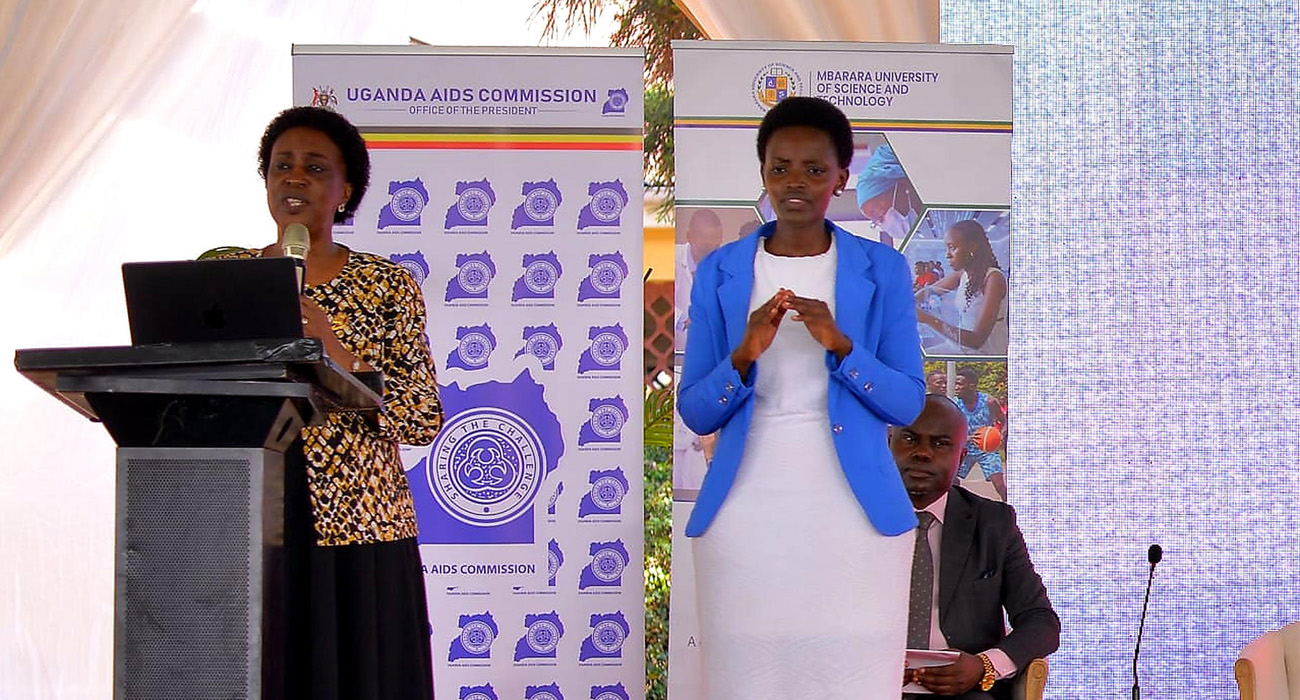
The concern was raised Monday, Nov. 16, during a press briefing ahead of the second National HIV and AIDS Symposium at Mbarara University of Science and Technology (MUST). The three day meeting, which runs until Nov. 18, brings together health professionals, researchers and policymakers to examine Uganda’s progress toward ending AIDS as a public health threat by 2030.
Organized by the Uganda AIDS Commission in partnership with MUST, the symposium focuses on sustainable interventions to strengthen the national HIV response, particularly among populations that continue to face barriers to testing, treatment and care.
Health experts say men remain a critical population in the fight against HIV because many delay seeking medical attention until their health has deteriorated. They are calling for more targeted community outreach, early testing and stronger support systems to encourage men to begin and remain on treatment.

Dr. Elias Kumba Kumba said increasing men’s participation in HIV prevention and treatment programs would be among the key issues discussed at the symposium.
“We will focus on how men can be brought on board in the fight since they don’t test and don’t get treatment,” he said.
Michael Matsiko, head of the Uganda AIDS Commission’s regional office, identified low uptake of HIV services among men as a persistent challenge that threatens progress in controlling the epidemic.
He also expressed concern about new HIV infections among adolescent girls and young women aged 15 to 24, a population that remains particularly vulnerable despite years of prevention campaigns and increased access to health services.
According to Matsiko, the symposium will provide an opportunity to assess Uganda’s performance against the National HIV and AIDS Strategic Plan, identify gaps in implementation and determine what additional interventions are needed to meet the country’s 2030 commitments.
Prof. Joseph Ngonzi, MUST’s deputy vice chancellor for academic affairs and chairperson of the symposium organizing committee, said the meeting would provide a platform for researchers and practitioners to present scientific findings that can guide HIV prevention and treatment programs.
“This meeting will act as an avenue to disseminate research evidence and abstracts for informed programming and practice. We have received abstracts for both oral and poster presentations,” Ngonzi said.
Uganda AIDS Commission figures cited by the organizers indicate that approximately 1.57 million people are living with HIV in Uganda, including about 71,000 children younger than 15. Among adults living with the virus, women account for 66.3% while men represent 33.7%.
Although women account for a larger proportion of people living with HIV, previous national analyses have identified significant gaps in men’s access to timely diagnosis, treatment and viral suppression, placing some at greater risk of severe illness and AIDS-related complications.
Health professionals attribute these gaps to several factors, including HIV related stigma, fear of a positive diagnosis, limited health seeking behavior and social expectations that discourage men from acknowledging illness or seeking medical assistance.
They warn that delayed testing can allow HIV to weaken the immune system before treatment begins, increasing the risk of opportunistic infections and complications that could otherwise be prevented through early diagnosis and consistent antiretroviral therapy.
The symposium is expected to attract researchers, government officials, cultural and religious leaders, civil society organizations and other stakeholders to examine scientific evidence and recommend practical approaches to improving HIV services across the country.
With antiretroviral treatment available free of charge through Uganda’s public HIV care programs and supported health facilities, experts say the challenge extends beyond access to medication. Encouraging people, particularly men, to know their HIV status, begin treatment promptly and remain in care will be essential to reducing avoidable deaths.
As Uganda works toward its 2030 target, health authorities maintain that sustained progress will depend on reaching populations that remain underserved while protecting the gains already made in HIV prevention, treatment and care.
No part of this publication or its digital content may be reproduced, distributed, published, broadcast, rewritten, or redistributed in whole or in part without prior written permission from Kalisho Info.
For inquiries, contact: kalishoinfo@gmail.com
Stay informed and ahead of the curve! Follow Kalisho Info for real-time updates and breaking news.