

KAMPALA, Uganda — A renewed push by the government to expand access to taxpayers’ financial information has revived a long running debate over tax enforcement and the constitutional right to privacy.

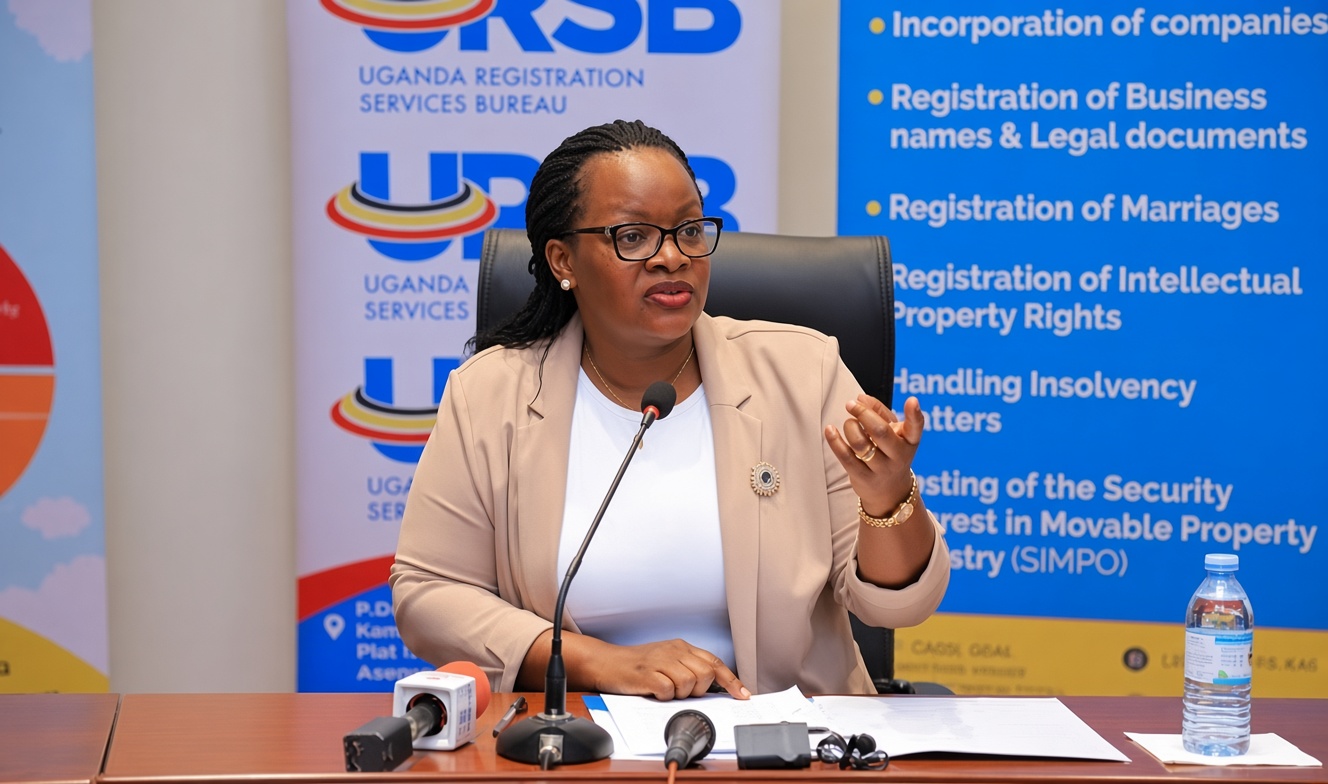
State Minister for Finance Amos Lugoloobi told Parliament this week that government would continue seeking access to individual bank accounts as Uganda reforms its taxpayer identification system.
“We shall continue coming until you allow us access to your individual bank accounts,” Lugoloobi said while updating MPs on the transition from Tax Identification Numbers (TINs) to National Identification Numbers (NINs).
Lugoloobi, however, clarified that linking a taxpayer’s NIN to the tax system does not by itself give government access to their bank account. Any broader access would require separate authorisation by Parliament.

The debate comes as the Uganda Revenue Authority (URA) works to clean its taxpayer register, which contains millions of individual records, including duplicates and inactive accounts.
URA had about 5.4 million individual taxpayer records by June 2026, but only about 3.3 million were estimated to be active. More than 190,000 duplicate records were identified during the 2025/26 financial year.
By late September, about 39 percent of individual taxpayer records had been linked to NINs. Officials say the exercise is intended to improve identification and remove inaccurate records, rather than automatically create tax liability or provide access to bank accounts.
However, the proposal to expand access to banking information has a history.
In 2018, URA asked commercial banks to provide information on customers, including account numbers, balances, credits, debits and contact details for the 2016 and 2017 financial years.
The Uganda Bankers Association and individual banks challenged the request. Cabinet later directed URA to withdraw the blanket request amid concerns about possible litigation and its impact on the banking sector.
In March 2023, the Constitutional Court ruled that the notices were unconstitutional.
Justice Christopher Madrama Izama, writing for a unanimous bench, found that the demand for information interfered with the right to privacy under Article 27 of the Constitution beyond what was necessary for tax collection.
The court did not, however, prevent URA from seeking banking information in specific tax investigations. Targeted requests can be made where there is a genuine investigation and sufficient legal grounds.
The latest push has therefore raised questions about what additional powers Parliament may be asked to give URA and whether those powers would permit routine access to financial information.
Supporters argue that stronger access would help URA identify undeclared income, improve tax compliance and raise domestic revenue at a time when Uganda is seeking to reduce its dependence on external financing.
Critics warn that routine access could weaken confidence in the banking system. They argue that existing legal procedures, including targeted requests and court oversight, already give URA tools to investigate suspected tax evasion without creating broad access to customer accounts.
The concern comes as Uganda continues to expand financial inclusion, with banks competing with mobile money and other financial services.
Data from the Uganda Bureau of Statistics shows active bank account ownership among adults increased from about 6 percent in 2021/22 to 8.1 percent in 2024/25. Access to bank services stood at about 13.4 percent.
Mobile money remains far more widely used. Transaction values reached Shs 263 trillion in the first seven months of 2026, equivalent to about 72 percent of the total recorded for the whole of 2025.
URA has also strengthened its ability to track financial activity held outside Uganda through the Automatic Exchange of Information framework.
In September 2025, the authority conducted its first exchange of information and identified about 120,000 offshore financial accounts held by Ugandan tax residents. The accounts had a combined reported value of about Shs 7 trillion and were linked in preliminary analysis to roughly 20,000 taxpayers.
The government now faces the task of balancing these tax enforcement efforts with privacy protections.
Parliament will have to determine the terms and safeguards for any expanded access to financial information. The 2023 Constitutional Court ruling and Uganda’s Data Protection and Privacy Act provide important limits on how personal financial information can be obtained and used.
Lugoloobi’s remarks show that the government intends to keep pursuing greater access.
The decision now lies with Parliament on where to draw the line between stronger tax enforcement and the privacy protections that underpin public trust in Uganda’s financial system.
No part of this publication or its digital content may be reproduced, distributed, published, broadcast, rewritten, or redistributed in whole or in part without prior written permission from Kalisho Info.
For inquiries, contact: kalishoinfo@gmail.com
Stay informed and ahead of the curve! Follow Kalisho Info for real-time updates and breaking news.