
KAMPALA, Uganda — When Uganda gained independence from British rule on Oct. 9, 1962, the celebrations introduced more than a new government. The national flag, anthem, coat of arms and monuments gave the young country a distinct identity, reflecting its history, aspirations and responsibility for governing itself.

More than six decades later, these symbols remain part of Uganda’s public life. Each tells a story about the country’s journey to independence and the hopes attached to its birth.
One of the most recognisable is the Independence Monument in central Kampala. The six metre concrete sculpture, created by Kenyan artist Gregory Maloba, depicts a mother breaking free from ropes while lifting a child towards the sky. The ropes represent colonial rule, while the child symbolises a new nation emerging into freedom.
The monument was unveiled on Oct. 8, 1962, a day before independence. It remains a reminder that freedom marked not just the end of colonial rule but the beginning of a new national responsibility.

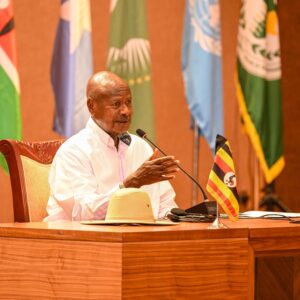
Uganda’s flag, adopted on Oct. 9, 1962, gave the country a new visual identity. It features six horizontal bands of black, yellow and red, with a grey crowned crane at the centre on a white disc. Black represents the African people, yellow the continent’s sunshine, and red African brotherhood and the blood connecting its people.
The story behind the flag’s designer is less straightforward. Grace Ibingira, then minister of Justice, is widely credited with designing it. However, historical accounts suggest his role was mainly in recommending and approving the final design rather than necessarily creating it alone.
An earlier design had been developed under a national symbols committee chaired by Senteza Kajubi during the Democratic Party government. After the Uganda People’s Congress won the 1962 elections, that design was set aside. The final flag drew on the UPC’s black, yellow and red party colours, while retaining the crowned crane from the colonial badge.
British art professor Cecil Todd, who taught at Makerere University and worked on national symbols, has also been credited with the flag’s artistic execution. Other claims of authorship have surfaced over the years, but no verified contemporary records conclusively establish one person as its sole creator. The flag is therefore best understood as a product of political decisions and design work during the transition to independence.
The national anthem, Oh Uganda! May God Uphold Thee, gave the new nation a voice. Its lyrics ask God to protect Uganda and call for unity, freedom and liberty. Sung at national ceremonies, in schools and at sporting events, it continues to express the hopes and responsibilities associated with independence.
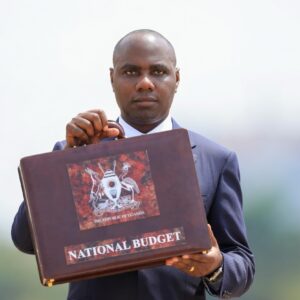
The national coat of arms, formally adopted at independence, brings together symbols of Uganda’s land, wildlife and cultural heritage. Its shield features the sun, a traditional drum and images associated with the country’s lakes. A crowned crane and a Uganda kob stand on either side, while coffee and cotton represent important agricultural products. The national motto, “For God and My Country,” appears beneath the design.
Another landmark is the Independence Arch at Parliament in Kampala. Prime Minister Apollo Milton Obote laid its foundation stone on Oct. 5, 1962, four days before independence. The arch marked the transition to self government and incorporated symbols associated with Uganda’s communities and traditional kingdoms. Its location connects the independence story to Parliament, the institution responsible for making laws and representing citizens.
Together, these symbols tell a story of a country establishing its identity. The monument represents liberation, the flag identifies the nation, the anthem expresses its aspirations, and the coat of arms brings together its natural and cultural heritage.
But independence was never just about symbols. It also meant accepting responsibility for the country’s future. As Uganda marks another Independence Day, these familiar objects invite citizens to remember the achievement of 1962 and consider the continuing work of protecting national sovereignty, promoting unity and building a country that reflects the hopes of its people.
No part of this publication or its digital content may be reproduced, distributed, published, broadcast, rewritten, or redistributed in whole or in part without prior written permission from Kalisho Info.
For inquiries, contact: kalishoinfo@gmail.com
Stay informed and ahead of the curve! Follow Kalisho Info for real-time updates and breaking news.