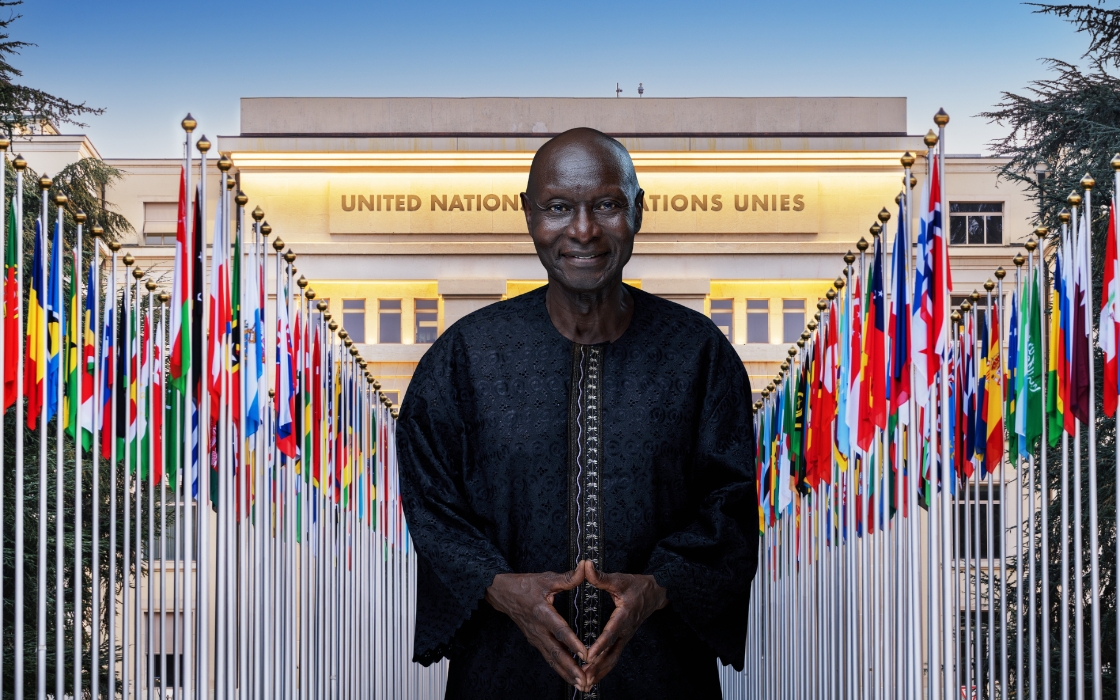
Ugandan diplomat Olara Otunnu has outlined an extensive reform agenda for the United Nations, calling for fundamental changes to the organisation’s leadership, administration and operations to restore its relevance and effectiveness.

In a statement issued on November 3, 2026, titled “Reforming the United Nations: No Longer an Option; It Is an Imperative,” Otunnu argued that the organisation must rethink how it operates or risk losing its ability to address the needs of ordinary people.
He posed a central question: “Will the United Nations matter in the lives of ordinary people in the years to come?” He said reform was necessary to restore public confidence and strengthen the organisation’s ability to deliver on the three pillars of the UN Charter: peace and security, human rights, and sustainable development.
Otunnu’s proposals build on the UN80 Initiative, launched by Secretary-General António Guterres in March 2025 as part of efforts to mark the organisation’s 80th anniversary and improve its efficiency.

He described the initiative as an important starting point but argued that the changes must go beyond staff reductions and administrative restructuring. He called for continuous reform to become part of the organisation’s institutional culture.
Among his proposals is a review of senior management structures, which he says have accounted for only a small share of the staff reductions implemented under the UN80 process. He questioned why cuts have disproportionately affected lower-ranking employees while senior management structures have largely remained intact.
He also called for a reduction in unnecessary bureaucracy and what he described as grade inflation within the UN system.
On regional operations, Otunnu proposed relocating more substantive political, humanitarian and development functions from expensive headquarters and duty stations to regional offices. He argued that bringing decision-making closer to the communities and countries served by the UN would improve responsiveness and strengthen cooperation with regional organisations.
He also wants the organisation to consolidate its administrative operations, including payroll systems, through a Common Administrative Platform. Greater investment in digital transformation and regional technology hubs would, in his view, help reduce costs and improve service delivery.
The reform agenda also addresses UN peacekeeping and other peace operations. Otunnu called for more focused and realistic mandates, with clear objectives, defined timelines and stronger accountability.
He said peace operations should have properly planned transitions and better burden-sharing arrangements. He also emphasised the need to respect national sovereignty and consult governments, local stakeholders and communities affected by UN missions.
On conflict resolution, he argued that ending major wars should be treated as an immediate priority. He called for impartial and sustained mediation, supported by innovative approaches, while acknowledging that the final decisions rest with the parties to conflicts and influential international actors.
Regarding human rights, Otunnu advocated for the consistent and impartial application of the principles of the UN Charter. He warned against selective approaches and the politicisation of human rights issues, arguing that rebuilding international consensus would require fairness in how the organisation addresses violations.
His proposals also include greater consultation with UN staff on reforms affecting salaries, remuneration and benefits. He cautioned that such changes must be handled carefully to avoid losing institutional knowledge and disrupting the organisation’s work.
Otunnu further called for a systematic, Member State-led review of existing UN mandates to identify duplication, improve priorities and ensure that available resources are directed towards agreed objectives. He said the Secretariat should support the process by providing technical analysis and helping implement the resulting decisions.
He also identified geographic representation, gender parity and multilingualism as priorities in building a more inclusive organisation.
Otunnu, born on September 6, 1950, brings extensive diplomatic and international experience to the contest.
He served as Uganda’s Permanent Representative to the United Nations from 1980 to 1985. During that period, he served as President of the UN Security Council in December 1981 and introduced an informal straw-ballot system for selecting candidates for senior UN positions. The procedure is widely known as the Otunnu Formula.
He later served briefly as Uganda’s Minister of Foreign Affairs before returning to international diplomacy.
Between 1997 and 2005, Otunnu served as UN Under-Secretary-General and Special Representative for Children and Armed Conflict. During his tenure, he helped elevate the protection of children affected by armed conflict within the Security Council and contributed to the development of the monitoring and reporting mechanism established under Security Council Resolution 1612.
He also led the International Peace Institute, formerly known as the International Peace Academy, and has held other academic and international roles. His work outside the UN system includes co-founding the Rocco Paco community movement in northern Uganda.
Uganda formally nominated Otunnu on July 24, 2026, making him one of several candidates seeking to succeed Guterres, whose second term ends on December 31, 2026.
Other contenders include Costa Rica’s Rebeca Grynspan, Argentina’s Rafael Grossi, who heads the International Atomic Energy Agency, and Guyana’s Carolyn Rodrigues-Birkett.
However, Otunnu faces a challenging contest. Reports from informal Security Council straw polls in late October indicated that he was trailing several contenders. One reported round gave him about four votes encouraging his candidacy against 11 discouraging votes, reflecting the difficulties facing his campaign.
The Security Council is expected to continue consultations and informal polling before making a recommendation to the UN General Assembly, which elects the next Secretary-General.
Otunnu’s latest statement places institutional reform at the centre of his campaign, arguing that efficiency improvements must be accompanied by clearer priorities, stronger leadership and greater cooperation among Member States.
He said meaningful change would require political consensus, practical solutions and the determination to implement agreed reforms.
No part of this publication or its digital content may be reproduced, distributed, published, broadcast, rewritten, or redistributed in whole or in part without prior written permission from Kalisho Info.
For inquiries, contact: kalishoinfo@gmail.com
Stay informed and ahead of the curve! Follow Kalisho Info for real-time updates and breaking news.