
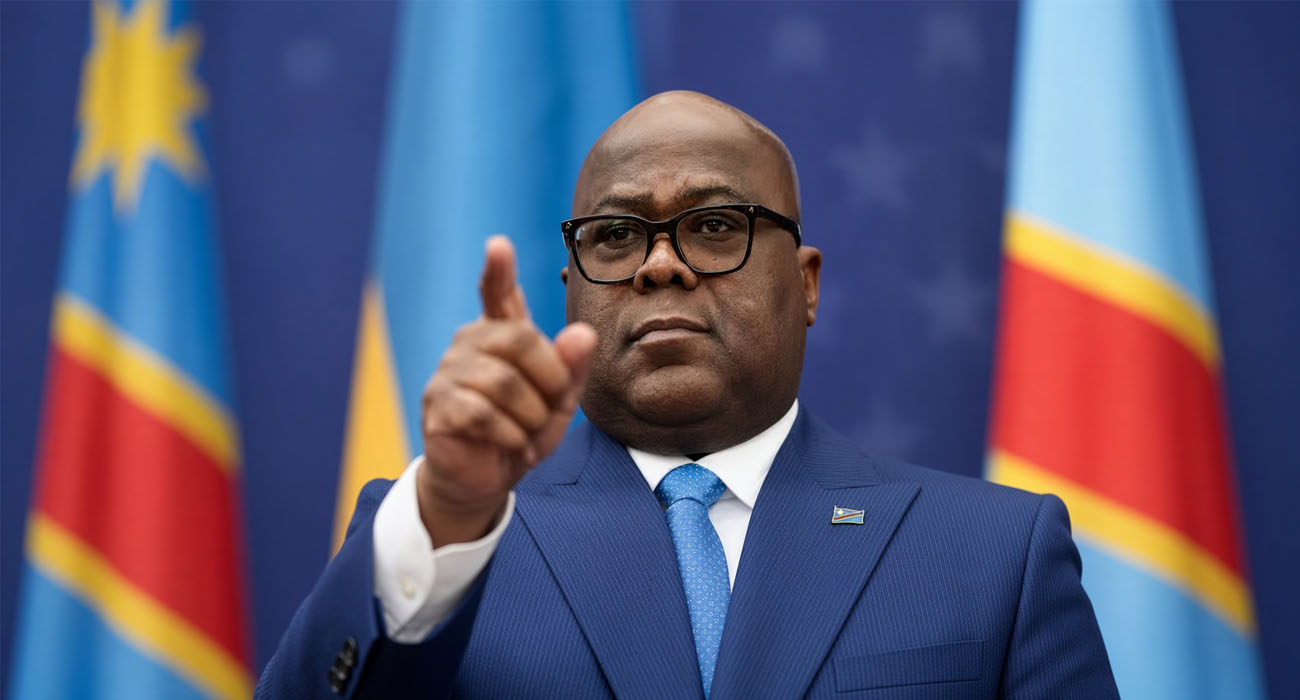
KINSHASA, DRC – The Democratic Republic of Congo’s National Assembly has approved revised legislation governing national referendums, bringing the country closer to having a legal framework for future constitutional votes.

The legislation was passed on Friday, Oct. 23, with 346 of the 347 lawmakers who took part voting in favor. One legislator abstained and none voted against the bill.
The vote has attracted particular attention because it comes amid a growing political debate over President Félix Tshisekedi’s future beyond his current second term.
Tshisekedi has been president since January 2019 and was re elected in December 2023. Under the current Constitution, his second term is due to end in 2028. The Constitution limits the president to two five year terms and protects the number and length of presidential terms from constitutional amendment.

The referendum law itself does not change those limits. It also does not extend Tshisekedi’s current term or set a date for a referendum.
Its significance lies in establishing rules for how a referendum can be organised, including in circumstances involving what the legislation describes as a major dysfunction of state institutions.
The latest parliamentary vote followed a review of 13 provisions after the Constitutional Court raised concerns about parts of the legislation. Tshisekedi had asked Parliament to reconsider the affected provisions.
Parliament’s Political, Administrative and Legal Commission subsequently revised the 13 articles before presenting the changes to lawmakers, who approved the revised text.
The legislation had already passed through Parliament earlier this year. The Constitutional Court ruled in July that the proposed law was compatible with the Constitution, although it raised concerns about provisions that could have given the president broad powers to call referendums on matters considered to be of fundamental national importance.
The debate has placed Tshisekedi’s political future at the centre of attention.
Critics fear that a constitutional process could eventually be used to remove the existing two term restriction and create a path for the president to seek another mandate. Tshisekedi has previously denied that he is seeking a third term, although he said in May that he would accept another mandate if the Congolese people wanted it.
Opposition figures have strongly criticised the referendum process. They argue that changing the constitutional framework could weaken safeguards designed to prevent presidents from remaining in power beyond the limits set by the Constitution.
The issue has already triggered demonstrations in Kinshasa. Earlier protests against the proposed changes turned violent, with clashes reported between demonstrators and security forces.
For supporters of the legislation, however, the process is being presented as part of the country’s constitutional and democratic institutions rather than an automatic route to extending the president’s tenure.
The political dispute is unfolding as the government continues to face a serious security situation in eastern DR Congo, where fighting involving the Rwanda backed M23 rebel group has contributed to displacement and humanitarian pressure.
The country’s political calendar also gives the debate a clear deadline. The next presidential election is expected in 2028, when Tshisekedi’s current second term is scheduled to end under the existing constitutional order.
Friday’s vote therefore does not mean that Tshisekedi will serve a third term. It establishes the legal framework for referendums, while the larger question of whether the Constitution itself will be changed remains unresolved.
Attention will now turn to the next steps in the process, including how the law is implemented and whether the government eventually seeks a referendum on constitutional changes.
For a country already facing armed conflict in the east and deep political divisions in Kinshasa, the constitutional debate is likely to remain one of the biggest political issues ahead of the 2028 elections.
No part of this publication or its digital content may be reproduced, distributed, published, broadcast, rewritten, or redistributed in whole or in part without prior written permission from Kalisho Info.
For inquiries, contact: kalishoinfo@gmail.com
Stay informed and ahead of the curve! Follow Kalisho Info for real-time updates and breaking news.