

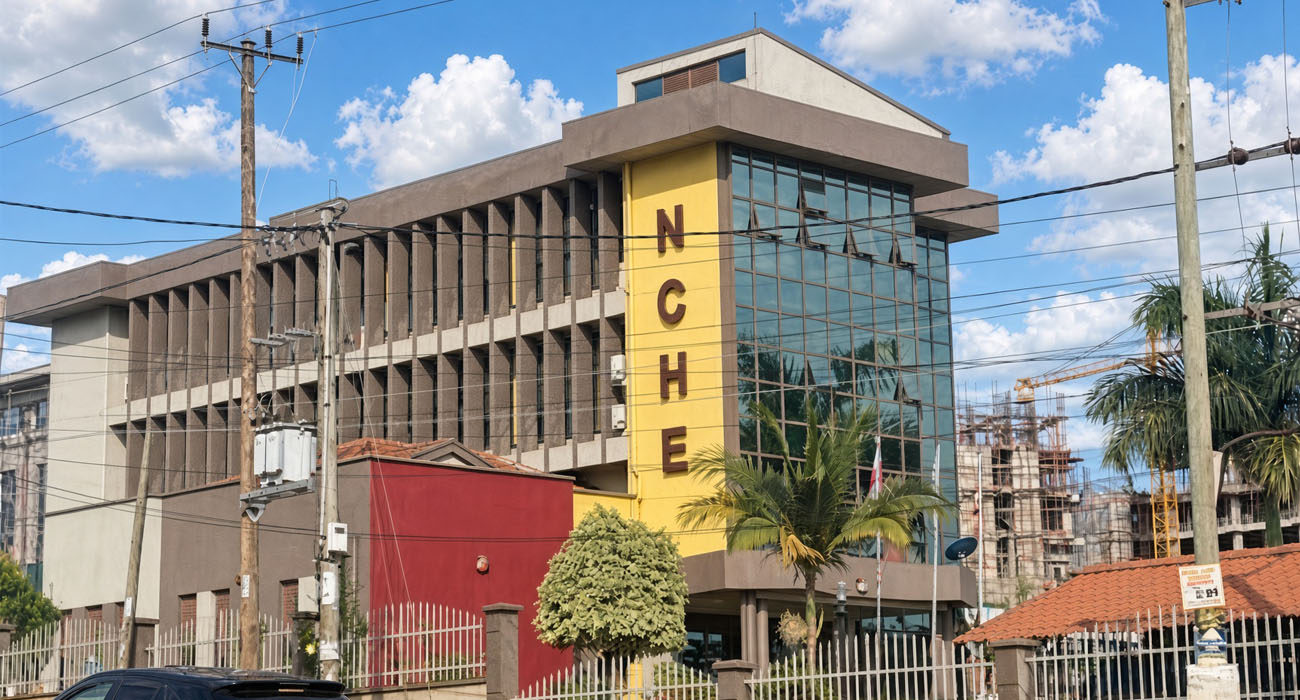
KAMPALA — The National Council for Higher Education (NCHE) has challenged the Pharmaceutical Society of Uganda’s decision to withdraw recognition of Mbarara University of Science and Technology’s (MUST) Bachelor of Pharmacy programme, insisting that the course remains fully accredited and that teaching should continue.

In a clarification issued on October 21, 2026, NCHE said the authority to recognise academic qualifications rests with the Council under the Universities and Other Tertiary Institutions Act. It also said it was neither involved nor consulted before the Pharmaceutical Society of Uganda (PSU) announced its decision to withdraw recognition of the programme.
The statement introduces a new dimension to a dispute that has raised concerns among pharmacy students, parents and the wider health sector. If the programme remains accredited, as NCHE maintains, what does PSU’s withdrawal of recognition mean for students who are expected to complete their studies and qualify to practise?
NCHE said MUST’s Bachelor of Pharmacy programme was first accredited in 2010 and has since undergone several re-accreditations. Its latest re-accreditation was granted on January 30, 2025, and is valid until 2036.

The Council said the accreditation processes were conducted in consultation with PSU, as required by law. It maintained that the programme’s accreditation had not been withdrawn and that teaching and learning should continue.
However, NCHE’s position does not erase the concerns that prompted PSU’s decision. The professional body cited inadequate staffing, the leadership of the Department of Pharmacy and the university’s failure to advertise the position of Head of Department for substantive appointment.
In its October 19 notice, PSU said it had raised the concerns during its September 4 council meeting and issued MUST a show cause notice on September 10, giving the university 30 days to explain why recognition should not be withdrawn. PSU said the university had not responded within the stipulated period.
The society subsequently announced the withdrawal of recognition with immediate effect. It warned that qualifications obtained from courses taught or assessed during the de-recognition period would not be recognised by its council. It also suspended the issuance of pharmacy student numbers, recognition of internship placements and eligibility for new graduates to sit its pre-internship and pre-registration qualifying examinations until compliance is restored.
These measures raise a question that accreditation alone may not answer: what happens to a graduate whose university programme is accredited by NCHE but whose professional progression is restricted by the body responsible for pharmacy training and registration?
NCHE’s clarification is firm on its own mandate. The Council cited Section 4(d)(ii) of the Universities and Other Tertiary Institutions Act, which provides for accreditation of academic and professional programmes in consultation with professional associations and regulatory bodies. It also referred to Section 4(i), which it says gives it the mandate to recognise academic qualifications.
The Council further cited its authority to receive and investigate complaints relating to higher education institutions under Section 4(f). It said it remains open to receiving complaints and taking appropriate action.
The central issue, therefore, is not simply whether MUST’s programme is accredited. It is also how the powers of the higher education regulator and the professional body interact when concerns arise over staffing, academic leadership and professional training standards.
The leadership dispute has already prompted changes at MUST. The university appointed Dr. Jonans Tusiimire, a registered pharmacist, Senior Lecturer and President of PSU, as Acting Head of the Department of Pharmacy for three months, effective October 19.
The appointment followed the resignation of the previous Head of Department, an Associate Professor of Pharmacy, who left in July 2026 to take up a more senior academic position at another university.
MUST had temporarily appointed a Senior Lecturer with a nursing background and a PhD in Pharmacology from Ghent University to head the department. The university said the lecturer had contributed to pharmacy teaching and research, but PSU objected to the arrangement because she was not a pharmacist by profession.
NCHE acknowledged the interim arrangement in its clarification and noted that the current acting head is a pharmacist who also serves as PSU president.
The new appointment may help address the immediate concern over professional leadership. However, the university must also address the staffing issues raised by PSU if the disagreement is to be resolved fully.
The matter has now attracted Parliament’s attention. On October 20, Deputy Speaker Thomas Tayebwa told MPs that NCHE had confirmed the programme remained accredited. He directed the Minister of Education and Sports to present a statement, with guidance from the Attorney General, on October 22 to clarify the legal mandates of the two bodies.
That intervention could prove significant. The public needs a clear explanation of whether a professional body can restrict the professional recognition of graduates from a programme that remains accredited by the national higher education regulator, and what legal remedies are available when the two positions conflict.
For students, the distinction is more than a regulatory argument. They need certainty about the validity of their studies, the recognition of their qualifications, access to internships and their eligibility for professional examinations after graduation.
NCHE has said teaching and learning at MUST should continue. PSU, meanwhile, has maintained restrictions linked to its withdrawal of recognition until the university addresses its concerns.
The two positions leave students seeking answers about the practical consequences of the dispute. The assurance that a course remains accredited does not, by itself, explain how affected students will navigate professional requirements if the disagreement continues.
The next step should be a clear, coordinated response from the relevant authorities. NCHE must explain the scope of its accreditation and recognition powers, PSU must clarify the professional requirements it says MUST has failed to meet, and the university must demonstrate how it is addressing the concerns raised.
No part of this publication or its digital content may be reproduced, distributed, published, broadcast, rewritten, or redistributed in whole or in part without prior written permission from Kalisho Info.
For inquiries, contact: kalishoinfo@gmail.com
Stay informed and ahead of the curve! Follow Kalisho Info for real-time updates and breaking news.