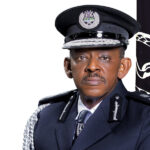


PARLIAMENT, Uganda — Ministers Kahinda Otafiire and Edward Katumba Wamala offered sharply different perspectives on Uganda’s Intelligent Transport Monitoring System (ITMS) on Tuesday, as Parliament examined the project’s effectiveness, cost and procurement.

Otafiire, the minister of water and environment who previously served as minister of internal affairs, said the system had added no value during his time in office. He questioned whether the technology delivered the vehicle tracking and security benefits presented to government.
Katumba, the minister of public service and former minister of works and transport, said the project was conceived primarily as a security initiative to help police investigate crime and track vehicles linked to criminal activity.
Appearing before Parliament’s Committee on Physical Infrastructure, chaired by Mwine Mpaka, the two ministers responded to questions about the agreement with Russia based Joint Stock Company Global Security, the company contracted to implement the system.
Katumba traced the project’s origins to rising insecurity in 2017 and 2018. He said President Yoweri Museveni wanted technology that could help security agencies track vehicles and support police investigations.
He told the committee that the president also wanted government agencies to stop acquiring parallel systems and instead use a common platform for functions including vehicle registration, freight management and speed monitoring.
Katumba said the project was intended to complement cameras already installed by police. He also explained that the Ministry of Works and Transport was separately replacing old number plates, partly because of cases in which the same registration number appeared on different vehicles.
He said the original plan included establishing a number plate factory in Uganda, with the National Enterprise Corporation (NEC) expected to work with the contractor and eventually take over production. A proposed site in Bugolobi was abandoned after it was identified as a wetland, while the ministry offered space at its vehicle inspection facility in Namanve.
Otafiire, however, said he had raised concerns about whether the new technology would work with the existing police camera system, which he described as Chinese technology. He said the equipment being introduced was associated with Russia and that compatibility should have been established before implementation.
He told MPs that he resisted the project until he came under pressure to allow it to proceed. He also questioned information from the due diligence process, saying he had been told that the equipment was assembled from components rather than manufactured as one integrated system, which he feared could complicate repairs.
Otafiire said consultations he made with police, Makerere University and contacts in Kenya did not reassure him about the system’s effectiveness. He added that he did not know whether the technology had improved since he left the Ministry of Internal Affairs.
His strongest criticism concerned the system’s ability to track vehicles when number plates were removed. Otafiire said he had participated in an experiment in which plates were taken from a vehicle and brought to his office, while the system was asked to identify the vehicle’s location.
According to Otafiire, the system continued to indicate the vehicle’s location even though its plates were elsewhere. He argued that this demonstrated the system was following a tracking device rather than the physical number plate, and questioned whether it could reliably detect plate removal.
He described the technology as closer to fleet management than the comprehensive intelligent transport monitoring system he expected. He said it could show where a vehicle was but, in his assessment at the time, did not provide the level of monitoring promised.
Otafiire also challenged the cost of the digital number plates, reported at Shs714,300. He asked why older plates had been charged at Shs50,000 or Shs150,000 while the new plates cost substantially more, and called on the project management team to explain the financial model.
He separately questioned the reported $25 million cost of the software, asking how the amount had been determined and whether the system could have been developed locally. He urged the committee to establish the role of the project’s information and communications technology subcommittee in assessing that cost.
Katumba said he could not confirm that Global Security’s system had improved security beyond the existing police infrastructure. He cited the police camera system’s role in helping trace suspects after a June 1, 2021 attack on him, but said he could not establish whether the contractor’s system had added to that capability.
He also said the police and Global Security operated separate software systems that, during his time in office, did not work together effectively. He told MPs that an attempt to use the contractor’s system for traffic penalties had clashed with the police system, which already had its own process for issuing fines.
Katumba said some questions about procurement and due diligence were beyond what he could answer because the project had been handled as a classified security procurement under the Office of the President. He said the Ministry of Works and Transport became involved in implementing its responsibilities after the agreement had been signed.
The committee also heard figures presented by police officials indicating that 337 of 375 stolen motor vehicles fitted with the plates had been recovered, compared with 174 of 782 stolen motorcycles. The figures prompted questions about the system’s effectiveness, particularly in recovering motorcycles.
MPs further scrutinised the contractor’s investment, the number of cameras installed and the financial model under which the company expects to recover its costs. Katumba said the project management team was reviewing the model because some of its original cost assumptions might no longer be relevant, while the contractor’s investment was due to be examined by the Internal Auditor General.
The committee’s inquiry is examining the project’s procurement, contractual obligations, costs and security outcomes, amid continuing questions over whether the system has delivered value for public money.
No part of this publication or its digital content may be reproduced, distributed, published, broadcast, rewritten, or redistributed in whole or in part without prior written permission from Kalisho Info.
For inquiries, contact: kalishoinfo@gmail.com
Stay informed and ahead of the curve! Follow Kalisho Info for real-time updates and breaking news.