

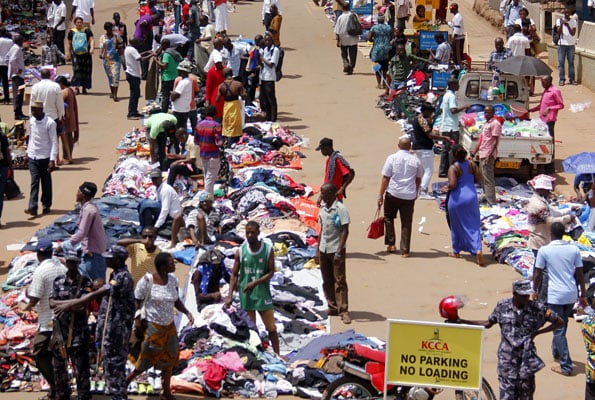
KAMPALA, Uganda — With days left before a Feb. 19, 2026 enforcement deadline, thousands of street vendors in Kampala’s central business district are preparing for eviction as the Kampala Capital City Authority, backed by security agencies, moves to clear what it calls illegal trading spaces from roads and other public areas.

The directive was first announced Feb. 5 by the Minister for Kampala and Metropolitan Affairs, Hajjat Minsa Kabanda. It targets vendors, hawkers, taxi drivers and boda boda riders operating outside designated stages. They have been ordered to vacate roads, walkways, drainage channels, junctions and road reserves or face arrest, prosecution and confiscation of goods.
KCCA says the exercise, which began Feb. 13 under the office of the Executive Director, aims to restore trade order, reduce congestion, improve public safety and protect city infrastructure. Officials link street vending to blocked building entrances, clogged drainage that worsens flooding, hygiene risks from ground level food sales and damage to pavements and green spaces.
At a Feb. 13 briefing at City Hall, Executive Director Hajjat Sharifah Buzeki urged traders to comply, saying business thrives in organized spaces and that order protects both traders and consumers. Government officials backing the operation say the goal is not punishment but to reset how commerce works in the city. They argue that roadside vending creates unfair competition for formal businesses that pay rent, taxes and licensing fees.

Support for stricter enforcement has also come from some arcade owners who say vendors block entrances and discourage customers from entering buildings. A similar notice issued in October 2025 was not fully enforced, fueling skepticism among vendors who say past crackdowns ended in selective arrests before traders returned to the streets.
Vendor leaders under the Federation of Uganda Traders Association have argued that relocation plans are inadequate. They say the city needs at least two functional markets per division before forcing traders off the streets. They also cite past market fires, high rent and low customer flow in enclosed markets as reasons many vendors returned to roadside selling.
Some vendor groups have petitioned for controlled trading licenses within parts of the central business district. Others have asked for the reinstatement of Sunday and evening markets and requested a one month extension to benefit from the back to school season following school reopening on Feb. 10.
A key question remains whether alternative spaces are sufficient and affordable. KCCA says it has identified 2,520 available stalls in public markets across the city, including Busega with 500 spaces, Usafi with 1,000, Wandegeya with 250, City Abattoir with 250, Kamwokya with 200, Nakawa and Luzira with 100 each, New Ntinda with 100 and Nateete with 20.
Beyond Kampala, the authority lists 1,980 additional spaces in neighboring municipalities. These include 180 in Kira, 1,000 in Mukono, 400 in Entebbe and 200 in Nansana. KCCA has also pointed to private markets, rentable properties along newly improved roads such as Sir Apollo Kaggwa Road, Luwafu and Wamala, and online trading supported by free business lessons at its Employment Service Bureau in Nakasero.
To qualify for a stall, vendors must register with KCCA or market management, verify their trader category and goods, provide proof of prior street vending where applicable and submit applications to a market allocation committee. Priority will be given to previously registered traders and vulnerable groups including women, youth and persons with disabilities where policy applies.
No part of this publication or its digital content may be reproduced, distributed, published, broadcast, rewritten, or redistributed in whole or in part without prior written permission from Kalisho Info.
For inquiries, contact: kalishoinfo@gmail.com
Stay informed and ahead of the curve! Follow Kalisho Info for real-time updates and breaking news.