
CARACAS, Venezuela — Venezuela is a South American country with vast natural wealth, dramatic landscapes and a long history of political struggle. It borders Colombia, Brazil and Guyana, with the Caribbean Sea to the north. From the Andes Mountains to the Amazon rainforest and the wide grasslands known as the llanos, the country is one of the most geographically diverse in the region.
Venezuela has a population of about 28 million people. Its capital, Caracas, sits in a narrow valley and reflects the country’s sharp contrasts — modern high-rise buildings alongside sprawling poor neighborhoods.

What has made Venezuela globally important is oil. The country holds the largest proven oil reserves in the world, estimated at more than 300 billion barrels. For decades, oil powered the economy and funded public services. It also created deep dependence, corruption and political conflict — problems that still shape the country today.
Table of Contents:
From Colonization to Oil Power
Venezuela was colonized by Spain in the 1500s and gained independence in 1821 under revolutionary leader Simón Bolívar, whose name later inspired the country’s “Bolivarian” political ideology.
For much of the 19th and early 20th centuries, Venezuela was unstable, ruled by military strongmen. One of them, Juan Vicente Gómez, governed from 1908 to 1935 and opened the country to foreign oil companies.
Oil was discovered in 1914. By the 1920s, Venezuela had become one of the world’s top oil exporters, attracting U.S. and European companies. Oil money built roads, schools and cities, especially in Caracas. But the wealth was unevenly shared, leaving many rural communities poor.
By the 1950s, under dictator Marcos Pérez Jiménez, Venezuela had one of the highest incomes per person in Latin America. The country was often called “Saudi Venezuela.” Still, inequality and political repression remained.
Democracy and Decline
In 1958, Pérez Jiménez was overthrown, and Venezuela entered a democratic period. Major political parties agreed to share power under the Punto Fijo Pact. Oil revenues grew, especially in the 1970s, and the government nationalized the oil industry in 1976, creating the state company PDVSA.
But heavy spending and corruption weakened the economy. When oil prices fell in the 1980s, Venezuela plunged into debt. In 1989, protests against rising prices erupted in Caracas and other cities. Security forces killed hundreds in what became known as the Caracazo.
Public trust collapsed. In 1992, a young army officer named Hugo Chávez led a failed coup. Though jailed, he became popular. He was later pardoned and won the 1998 election.
Chávez and the Bolivarian Revolution
Chávez took office in 1999 promising to empower the poor. A new constitution expanded presidential powers and allowed re-election. High oil prices funded social programs that improved access to health care and education. Poverty fell, and Chávez built strong support among the poor.
At the same time, Chávez tightened control over state institutions, weakened independent media and nationalized businesses. Critics were jailed or forced into exile. The economy became heavily controlled, with price caps and currency restrictions that led to shortages and corruption.
Chávez survived a failed coup in 2002 and remained in power until his death from cancer in 2013. His rule deeply divided Venezuela — admired by supporters and feared by opponents.
Maduro and Economic Collapse
After Chávez’s death, Nicolás Maduro narrowly won the 2013 election. Oil prices collapsed in 2014, exposing years of mismanagement. The economy shrank sharply. Inflation reached extreme levels, making salaries almost worthless.
Food and medicine shortages became widespread. Protests broke out in 2014 and 2017, and security forces responded with deadly force.
The United States and other countries imposed sanctions over human rights abuses and election fraud. In 2017, Maduro sidelined the opposition-controlled parliament and installed a loyal assembly. His 2018 re-election was widely rejected internationally.
By the mid-2020s, more than 7 million Venezuelans had fled, creating the largest migration crisis in Latin America. Many crossed borders on foot, similar to how economic hardship forces migration in parts of Africa.
Power Struggles and International Pressure
In 2019, opposition leader Juan Guaidó declared himself interim president and was recognized by dozens of countries. However, he failed to remove Maduro, who retained control of the military and state institutions.
The economy partially stabilized after informal use of the U.S. dollar and relaxed controls, but inequality deepened. Sanctions were partly eased in 2023 amid global energy shortages.
Disputed Elections and 2026 Crisis
The crisis that led to direct U.S. involvement in Venezuela built steadily over several years, but it accelerated after the July 28, 2024, presidential election, which many observers described as neither free nor fair.
President Nicolás Maduro sought another term after blocking leading opposition figure María Corina Machado from running. The opposition instead backed former diplomat Edmundo González. While election authorities declared Maduro the winner with about 52 percent of the vote, the opposition released its own tallies showing González with a wide lead.
Independent election monitors were restricted, and several international observer missions were denied full access. Soon after the results were announced, protests broke out in Caracas and other cities. Security forces responded with force, killing more than 20 people and arresting thousands, according to human rights groups.
The United States, the European Union and several Latin American governments rejected the official results, saying they lacked credibility. Washington reimposed and tightened sanctions on Venezuela’s oil and financial sectors, reversing earlier concessions that had been offered in exchange for electoral reforms.
At the same time, U.S. officials said they were increasingly concerned about Venezuela’s growing security ties with Russia, Iran and Cuba, as well as the expanding influence of the criminal gang Tren de Aragua, which Washington linked to drug trafficking and regional crime.
Diplomatic Pressure Gives Way to Force
Throughout late 2024 and 2025, U.S. policy focused on diplomacy, sanctions and regional pressure. Talks mediated by Norway and supported by Brazil and Colombia failed to produce a political settlement. Maduro’s government continued mass arrests of opposition figures, journalists and civil society activists.
In 2025, the U.S. formally designated Tren de Aragua as a terrorist organization, accusing senior Venezuelan officials of protecting and benefiting from the group. American prosecutors also revived long-standing drug trafficking indictments against Maduro and top allies, accusing them of running a “narco-state.”
At the same time, global energy politics shifted. Continued war-related disruptions and competition with China and Russia increased Washington’s focus on securing stable oil supplies closer to home. Venezuela’s vast reserves, combined with its deepening alliances with U.S. rivals, became a strategic concern.
By late 2025, U.S. officials said they had exhausted diplomatic options. Intelligence assessments warned of a potential state collapse, uncontrolled migration and expanded criminal networks reaching Central and North America.
The January 2026 Operation
On January 3, 2026, the United States launched a coordinated military and law enforcement operation targeting key Venezuelan government sites. U.S. officials said the goal was to enforce existing indictments and prevent further regional destabilization.
Airstrikes hit selected security installations in Caracas, followed by a rapid raid that led to the capture of Maduro and his wife, who were flown to the United States to face drug-related charges first filed in 2020.
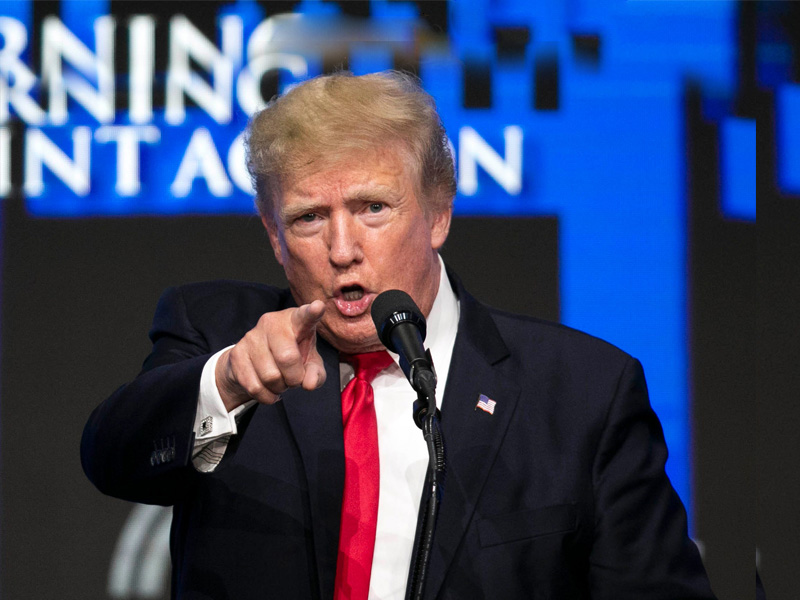
The operation marked the most direct U.S. intervention in Venezuela in decades. President Donald Trump, newly returned to office, warned that further action would follow if loyalist forces resisted a political transition.
Cuba confirmed that several of its security personnel were killed during the operation. Russia and China condemned the action as a violation of Venezuelan sovereignty, while U.S. allies were divided over the legality but urged restraint.
A Fragile Transition
Following Maduro’s removal, Venezuela’s Supreme Court named Vice President Delcy Rodríguez as interim leader. Opposition groups moved quickly to occupy government buildings and called for internationally supervised elections.
As of early January 2026, Rodríguez signaled willingness to cooperate with international mediators, including the United States, to organize a transition. The military leadership remained largely intact, raising concerns about internal power struggles.
For ordinary Venezuelans, daily life remained difficult. Food shortages, inflation and migration continued, even as celebrations in some neighborhoods were matched by fear and uncertainty in others.
The 2026 crisis underscored how Venezuela’s long-running political conflict, economic collapse and strategic importance eventually pulled the United States from indirect pressure into direct action — ending one chapter of the crisis, while opening another whose outcome remains uncertain.
How Venezuela’s story is relevant
Venezuela’s story shows how natural wealth can become a curse when institutions are weak. Oil dependence crowded out other industries, while politics turned survival into a daily struggle.
Like many societies under pressure, Venezuelans learned to hide opinions, switch identities and adapt quietly — a reality familiar to people in countries where speaking openly can carry risks.
As of early 2026, Venezuela’s future remains unclear. What happens next will affect energy markets, regional stability and millions of displaced citizens still searching for safety and dignity.