
On Tuesday, May 12, 2026, President Yoweri Kaguta Museveni, who won the January 15 presidential election with 7,946,772 votes representing 71.65 percent of all valid votes cast, will be sworn in for his seventh term. The occasion draws more than 30 international delegations, 15 revolutionary parties from across the continent and beyond, members of parliament, ambassadors, religious and cultural leaders, and ordinary citizens who have traveled from every corner of Uganda to witness the moment.
“This is not just a ceremony, but a moment to account to Ugandans and set the tone for the next phase.”
— Minister of the Presidency Milly Babalanda
Why May 12? The History Behind the Date
To understand why Museveni swears in on May 12, one must reach back not to the Constitution’s drafting rooms but to the turbulent corridors of Ugandan political history. The date is not arbitrary, and it is not accidental. It is, in the quiet tradition of the National Resistance Movement, freighted with meaning.
On May 12, 1980, Uganda’s president at the time, Godfrey Binaisa, was removed from office by the Military Commission of the Uganda National Liberation Front following his attempt to dismiss Army Chief of Staff Brig. David Oyite Ojok. The Military Commission, led by Paulo Muwanga with a young Yoweri Museveni serving as his deputy, seized power. Binaisa’s 11-month presidency ended in an afternoon, triggering a period of military rule that would lead to the disputed December 1980 general elections and then, in 1981, to Museveni’s decision to launch a guerrilla war from the bush.
For the NRM, May 12 represents what its ideologues describe as the crossing of the Rubicon. It was the moment that, in their reading of history, made everything that followed both necessary and inevitable. When Museveni first held constitutional elections in 1996 and was inaugurated as president, the choice of May 12 as the date for that ceremony was deliberate. Dates, as those close to Museveni have long noted, matter deeply to him. He had already demonstrated this sensibility in January 1986, when the National Resistance Army purposefully delayed the official declaration of Kampala’s fall by a day, choosing January 26 rather than January 25, to avoid sharing a date with Idi Amin’s 1971 coup.

A pattern of deliberate dates
The Constitutional Clock: Why the Term Ends When It Does
Uganda’s 1995 Constitution, under Article 105(1), holds that a president shall serve exactly five years. That clock is not metaphorical. At midnight on the final day of a term, the office becomes vacant by operation of Article 105(3)(a), regardless of whether a successor has yet been inaugurated. The constitutional order does not tolerate gaps.
Article 103(9) closes that gap with surgical precision. It stipulates that a person elected president during the term of a sitting president shall assume office within 24 hours of the expiration of the predecessor’s term. It is this provision, and not political convention, that forces the swearing-in onto a specific calendar window. Minister Babalanda underscored this point in her announcement of the ceremony, reminding Ugandans that the legal architecture of the event is mandatory, not ceremonial in origin.
The Ceremony: Oath, Symbol, and State Pageantry
The swearing-in ceremony, scheduled to run from 8 a.m. to 2 p.m. under the theme “Protecting the Gains, Making a Qualitative Leap to Higher Middle-Income Status,” is the moment the constitutional machinery becomes visible. It is solemn and celebratory simultaneously. Government leaders, parliamentarians, foreign heads of state, diplomats, religious and cultural leaders, and thousands of citizens converge on Kololo in what amounts to a national gathering unlike any other on Uganda’s calendar.

Under Article 98(3) of the Constitution, the president-elect must take and subscribe to two oaths from the Fourth Schedule before assuming any duty of office. These are administered by the Chief Justice or a designated judge, and they are the constitutional hinge on which the transfer of power turns.
Oath of Allegiance
“I, [name], swear in the name of the Almighty God / solemnly affirm that I will be faithful and bear true allegiance to the Republic of Uganda and that I will preserve, protect and defend the Constitution.”
Presidential Oath
“I, [name], swear in the name of the Almighty God / solemnly affirm that I shall faithfully exercise the functions of the President of Uganda and shall uphold, preserve, protect and defend the Constitution and observe the laws of Uganda and that I shall promote the welfare of the people of Uganda. [So help me God.]”
These oaths are not ceremonial formalities. They are the constitutional instrument by which the president-elect becomes the president. They bind the occupant of the office to the Constitution as the supreme law of the land, above personal interest, above party, above everything. A president who violates the Constitution violates first the oath that made the office real.
The Handover: Instruments of State and Command Transfer
The moment the oaths conclude, power transfers. Under Article 98(1) of the Constitution, the new president simultaneously assumes three roles: Head of State, Head of Government, and Commander-in-Chief of the Uganda People’s Defence Forces. There is no interregnum, no transition period, no acting authority. The constitutional clock that ran out at midnight is replaced, within 24 hours, by a new one.
In the public ceremony, this transfer is made tangible. The Constitution itself, the Ugandan national flag, and the Public Seal are formally handed over in a symbolic act witnessed by thousands. When the incumbent wins re-election, as Museveni has done repeatedly, there is no personal transfer of authority between individuals. Instead, a fresh constitutional mandate is affirmed by oath. The term ends, another begins. Even in continuity, the form matters.
In 1986, Museveni’s initial swearing-in on the steps of Parliament marked a revolutionary break from what had come before. Since the 1996 constitutional elections, every subsequent inauguration has followed this precise ritual at Kololo, giving the ceremony the weight of living tradition in addition to its legal authority.
Reconstituting the Government: The Hours After the Oath
With constitutional authority secured, the president moves swiftly to reconstitute the executive. Under Article 108, the vice president is appointed or reappointed. The prime minister and cabinet ministers follow, with those appointments subject to parliamentary approval where the Constitution requires it. Key figures in government, the security services, and parastatals are confirmed or replaced in a wave of appointments that can stretch across days and weeks.
This phase is where the ceremony’s significance becomes practical governance. The inauguration is not the end of a political process. It is the beginning of an executive term, and the appointments that follow it determine who will be making policy decisions for the five years ahead.
- Vice president appointed or reappointed (Article 108)
- Prime minister and cabinet constituted, subject to parliamentary approval
- Senior appointments in security services, government, and parastatals confirmed
- New presidential mandate officially commences
A Ceremony Built for a Nation Still Becoming Itself
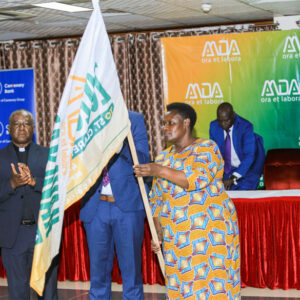
The government has organized a series of events in the days leading up to Tuesday’s inauguration. Thanksgiving prayers were held in mosques on May 8, Seventh-day Adventist churches on May 9, and other Christian denominations on May 10. A handover of the outgoing term’s manifesto implementation report has been scheduled alongside the prayers, in what the government describes as a moment both of accountability and of transition.
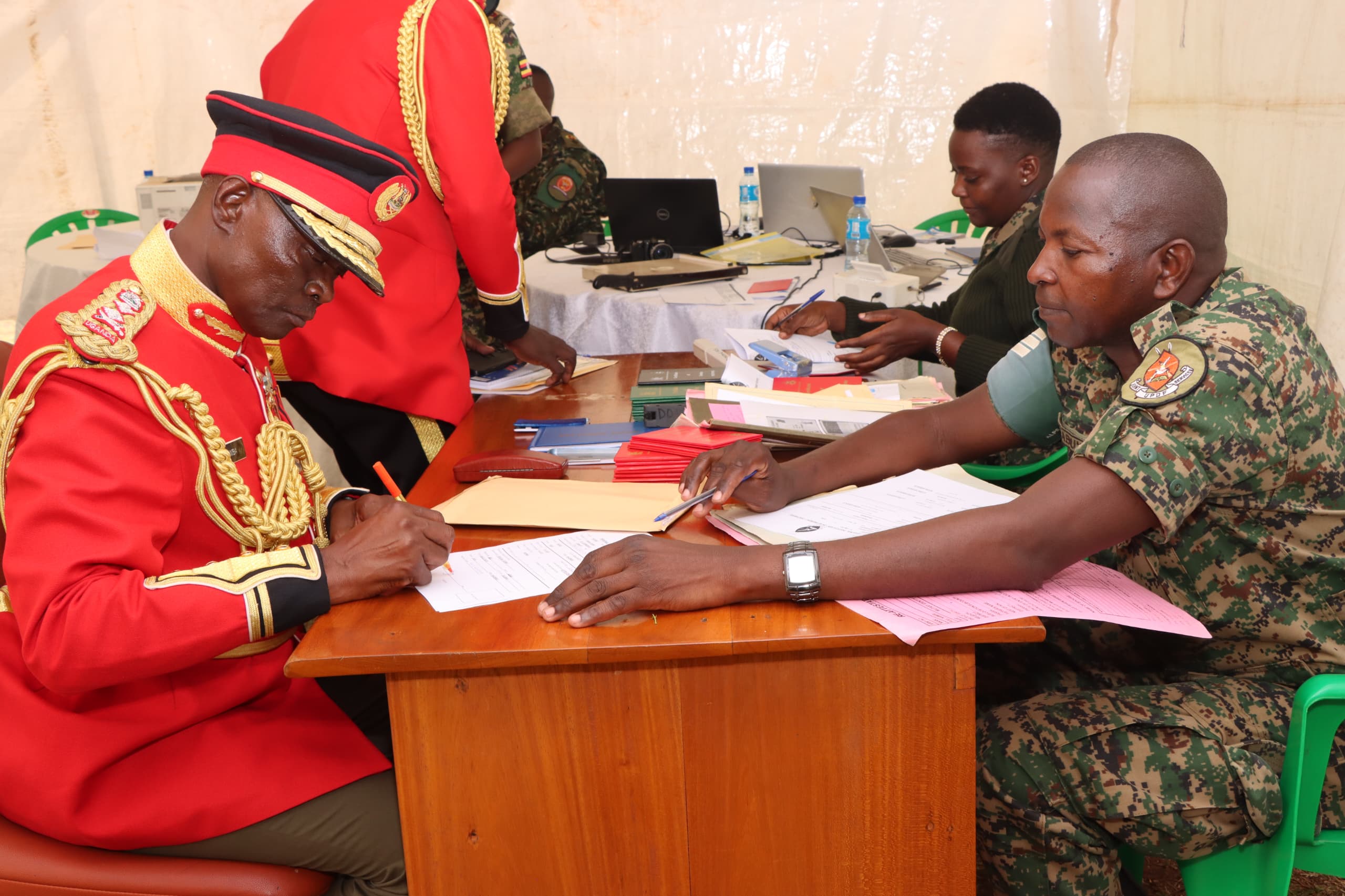
The ceremony has been declared a public holiday. Between 30,000 and 40,000 people are expected at Kololo alone. Ahead of the event, the National Identity Registration Authority temporarily shifted its operations from Kololo to Kitante School to clear the grounds for preparation. Security agencies have coordinated traffic and access arrangements across Kampala.
What will happen on Tuesday morning at Kololo is the same thing, in constitutional terms, that has happened there every five years since 1996: the supreme law of Uganda will be invoked, two oaths will be taken, and the office of the presidency will be filled for another term. The crowd will roar. The flags will fly. And somewhere in the pageantry, the country will have done the quiet, consequential work of governing itself by law.
No part of this publication or its digital content may be reproduced, distributed, published, broadcast, rewritten, or redistributed in whole or in part without prior written permission from Kalisho Info.
For inquiries, contact: kalishoinfo@gmail.com
Stay informed and ahead of the curve! Follow Kalisho Info for real-time updates and breaking news.